TL;DR:
- Genuine handmade ceramics make meaningful gifts due to their craftsmanship and unique imperfections. It is essential to choose food-safe, low-porosity stoneware or porcelain, especially for practical use. Proper packaging and clear care instructions ensure the gift lasts and maintains its beauty over time.
Finding a gift that genuinely means something is harder than it looks. The shops are full of candles, generic vouchers, and mass-produced homeware that says very little about the thought behind it. Handmade ceramics are different. A well-chosen ceramic mug or tea cup carries the mark of a real maker's hands, and that translates into something the recipient actually feels. This guide walks you through everything you need to know, from selecting safe, high-quality pieces and assembling a curated set, to packaging them beautifully and ensuring they last a lifetime.
Table of Contents
- What to consider before gifting handmade ceramics
- Step-by-step: How to assemble the perfect ceramic gift
- Packaging, protection, and presentation secrets
- Care instructions to include for handmade ceramic gifts
- A fresh perspective on meaningful gifting
- Discover standout ceramic gifts for every occasion
- Frequently asked questions
Key Takeaways
| Point | Details |
|---|---|
| Choose quality materials | Opt for food-safe, lead-free ceramics—stoneware or porcelain—for safe gifting. |
| Package with care | Double-boxing and cushioning are essential to avoid breakage and disappointment. |
| Personal touches matter | Curate sets, add a note, and present your ceramics beautifully for maximum impact. |
| Include simple care tips | Provide recipients with clear guidance to help them enjoy and protect their handmade ceramics. |
| Support local artisans | Buying from local makers lets you assess quality firsthand and add a meaningful story to your gift. |
What to consider before gifting handmade ceramics
Once you appreciate the appeal of artisanal ceramics, it is vital to know what makes a piece genuinely suitable and safe for gifting. Not every beautiful pot is a practical one, and the last thing you want is to give someone a mug that can't hold coffee safely.
Safety first: food-safe and non-toxic materials
The single most important thing to check is whether the ceramic is food-safe. This means the glaze must be lead-free and non-toxic, and clearly labelled as such by the maker. Some older or decorative ceramics use glazes that look stunning but are not intended for contact with food or drink. Always ask the potter or check the product description before you buy.
Porosity is another factor that many gift-givers overlook entirely. Ceramics with highly porous clay over 3% risk developing micro-cracks in the dishwasher over time, which can harbour bacteria and compromise the piece structurally. Ideally, you want porosity below 2%, which is standard in quality stoneware and porcelain.
Choosing the right material
Stoneware and porcelain are the two materials you should prioritise when selecting ceramics for gifting. Both fire at high temperatures, which makes them dense, durable, and far less porous than earthenware. This density also gives them a satisfying weight in the hand, which signals quality immediately to the recipient.
If you want to explore the specific qualities that make a gifting piece special, a detailed quality stoneware guide is worth reading before you shop. Understanding what distinguishes a premium stoneware piece from a cheaper alternative helps you spend your money wisely.
When to buy in sets
For milestone occasions such as weddings, housewarmings, or significant birthdays, a curated set makes a much stronger impression than a single piece. Sets allow you to create a cohesive aesthetic for the recipient's table and suggest that you considered how the items would work together in daily life. Matching mugs with a small pouring vessel, or a pair of tea cups alongside a simple tray, instantly elevates the gift.
Key qualities to look for when buying handmade ceramics as gifts:
- Food-safe glaze, clearly labelled by the maker
- Lead-free and non-toxic materials throughout
- Porosity under 3%, ideally under 2%, for dishwasher compatibility
- Dense, high-fired stoneware or porcelain for durability
- Satisfying weight and smooth texture, best assessed in person or through a trusted local maker
- Stackable forms for sets, especially useful for kitchen storage
- Consistent colour and finish within a matching set
Pro Tip: Buying from a local Australian ceramicist gives you the advantage of physically handling the piece before purchase. You can feel the weight, check the glaze quality, and confirm food-safe status directly with the maker.
Exploring the world of ceramics for gifting reveals just how wide the selection has become in recent years, particularly in the Australian artisan market where independent makers are producing work of exceptional quality.
Step-by-step: How to assemble the perfect ceramic gift
With the basics established, you can now work through the process of curating a beautiful, personal ceramic gift step by step. This is where the real enjoyment begins.

Step 1: Choose your centrepiece piece
Start with one hero item. This is the piece the recipient will reach for every morning or use most often. A beautifully thrown mug, an elegant tea cup, or a generously sized bowl can all serve as an anchor. Choose something that reflects the recipient's personality, their colour preferences, and how they actually live. A minimalist who drinks black coffee every morning will love something different to a tea enthusiast who hosts Sunday afternoon catch-ups.

Step 2: Build around it with complementary items
Once you have your centrepiece, consider what would complete the experience. A mug pairs naturally with a small ceramic tray or a matching cup for a friend or partner. A tea cup becomes a set with a simple saucer or a petite teapot. The key is to keep the palette cohesive. Colours and textures should feel related without being overly matchy. A shared matte finish or a recurring earth tone creates visual harmony without making the set feel like it came off a factory line.
Step 3: Personalise with a note or theme
A handwritten note transforms a beautiful object into a meaningful one. Keep it short and specific. Mention why you chose this particular piece, or what you imagine the recipient doing while they use it. Sitting with their morning coffee while the house is quiet. Pouring tea for a friend on a rainy afternoon. These small details create a story around the gift and make it impossible to forget. For inspiration on how presentation style affects the overall impact, styling ceramic gifts covers this in satisfying detail.
Step 4: Decide on solo piece or curated set
| Feature | Solo piece | Curated set |
|---|---|---|
| Best for | Birthdays, personal tokens, thank-you gifts | Weddings, housewarmings, milestone occasions |
| Price point | More accessible | Greater perceived value |
| Presentation impact | Elegant and focused | Visually impressive, layered experience |
| Personalisation | Easier to tailor precisely | More creative scope |
| Practicality | Immediately usable | Introduces a new daily ritual |
Both approaches work beautifully. The solo piece wins when you know the recipient's taste precisely. The set wins when you want to make a lasting impression and give the recipient something that changes how they experience their kitchen or table.
Pro Tip: When assembling a ceramic gift set, limit yourself to three items maximum. More than three pieces can feel overwhelming rather than curated, and the aesthetic impact tends to dilute.
The principles behind mindful gifting remind us that the best gifts are ones the recipient actually uses every single day, not pieces that sit behind glass or get forgotten in a cupboard.
Packaging, protection, and presentation secrets
After assembling a thoughtful ceramic gift, make sure it is presented and protected in a way that enhances delight and safeguards against accidents. This step matters more than most people realise.
The double-boxing method
The most reliable way to protect fragile ceramics is the double-boxing technique. Wrap the ceramic individually in bubble wrap, honeycomb paper, or foam, then place it inside one box surrounded by at least 5 to 7 centimetres of cushioning on all sides. That inner box then goes inside a slightly larger outer box, again with padding filling every gap. Movement is the enemy. If anything shifts during transit, breakage is almost inevitable.
Research into ceramic packaging suggests that double-boxing prevents the majority of breakages during shipping, with moulded foam inserts reducing claims by approximately 60% in some documented cases. That is a significant improvement for a relatively small investment in better packaging materials.
Best materials for safe, eco-friendly packaging
You do not need to compromise on environmental values to package ceramics safely. Several excellent materials protect well while remaining sustainable:
- Honeycomb kraft paper: Excellent cushioning, fully recyclable, and looks beautiful as a wrapping layer
- Recycled bubble wrap or biodegradable alternatives: Provides reliable shock absorption for fragile glazed surfaces
- Corrugated cardboard inserts: Ideal for separating multiple pieces within a set
- Tissue paper: Perfect as an inner layer against the ceramic surface to prevent scratching
- Kraft paper fill: Fills void space effectively and composts cleanly after use
Adding a personal presentation layer
The outer packaging tells the first part of the story before the recipient even opens the box. Use quality kraft boxes or linen pouches rather than generic plastic bags. A strip of washi tape, a sprig of dried eucalyptus, or a small handwritten label adds warmth without excessive fuss. Think about the moment the recipient holds the parcel. That first impression matters.
"Packaging is the first chapter of the gift experience. A ceramic piece that arrives wrapped with care communicates the same values as the object itself: patience, attention, and intention."
Common mistakes to avoid: placing unwrapped ceramics directly into a box, skipping the fragile label on the outside, using newspaper alone as padding (which compresses too easily), and failing to fill the void spaces that allow items to shift and collide.
For detailed ceramic care tips you can share alongside your packaging, it helps to include a small insert or card inside the gift.
Care instructions to include for handmade ceramic gifts
Finally, make your ceramic gift truly complete by ensuring the recipient knows how to look after their special piece properly. A handmade ceramic treated with a little knowledge will last decades. One mistreated in the first week can be damaged permanently.
Essential care points to pass on
The care requirements depend largely on the material. As noted, stoneware and porcelain with low porosity are the most forgiving, handling the dishwasher and microwave without stress. Higher-porosity pieces need more attention.
Recommended care guidelines to include with your ceramic gift:
- Hand washing is always the gentlest option, using warm water and mild detergent
- Stoneware and porcelain with porosity under 2% can generally go in the dishwasher on a gentle cycle
- Avoid sudden temperature changes: do not pour boiling liquid into a cold mug straight from the fridge
- Do not use abrasive scrubbers on glazed surfaces as they can scratch and dull the finish over time
- Stack cups carefully, placing a soft cloth between pieces if storing them nested together
- Check whether the specific piece is microwave-safe before heating food or liquid inside it
- For highly porous pieces above 3%, always hand wash and air dry to prevent moisture absorption and micro-cracking
Creating a care card
A small printed or handwritten care card tucked inside the gift packaging adds a lovely finishing touch. Keep it brief, three to five bullet points at most, printed on quality card stock or written in a style that matches the aesthetic of the gift. It shows you thought ahead to the recipient's experience of using the piece, not just receiving it.
Checking the maker's own dishwasher safe ceramics guidelines is the most accurate source for care information, since different clay bodies and glaze recipes behave differently under heat and water.
Pro Tip: Include the maker's name and website on the care card. If the recipient loves the piece, they should be able to find more, and it honours the craftsperson whose work you chose.
A fresh perspective on meaningful gifting
Here is something most gift guides won't say plainly: the imperfections in a handmade ceramic are not something to apologise for. They are precisely the point.
Mass-produced homeware is designed to be flawless and interchangeable. Every mug from a factory run looks identical, sits identically in your hand, and carries no trace of a human decision. A handmade piece is the opposite. The slight variation in thickness at the rim, the subtle shift in glaze where the kiln temperature changed, the faint thumbprint impression in the clay: these are evidence of a real person making a real thing. When you give that as a gift, you are giving something that exists nowhere else on earth.
There is also something worth considering about what your gift choices say about your values. Choosing a ceramic made by an independent artisanal quality maker in a small studio is a decision that supports a living, working craftsperson. It invests in the continuation of a skill that takes years to develop. That context doesn't need to be announced when you give the gift, but it exists in the object itself.
The most powerful gifts are ones that become woven into daily life. A handmade mug used every morning for years becomes a quiet companion. It outlasts most other gifts not because ceramics are indestructible, but because something made with care and chosen with intention carries a kind of staying power that a generic item simply cannot manufacture.
Discover standout ceramic gifts for every occasion
For those ready to choose a remarkable ceramic gift, here's where to find thoughtfully selected pieces and sets for any occasion.
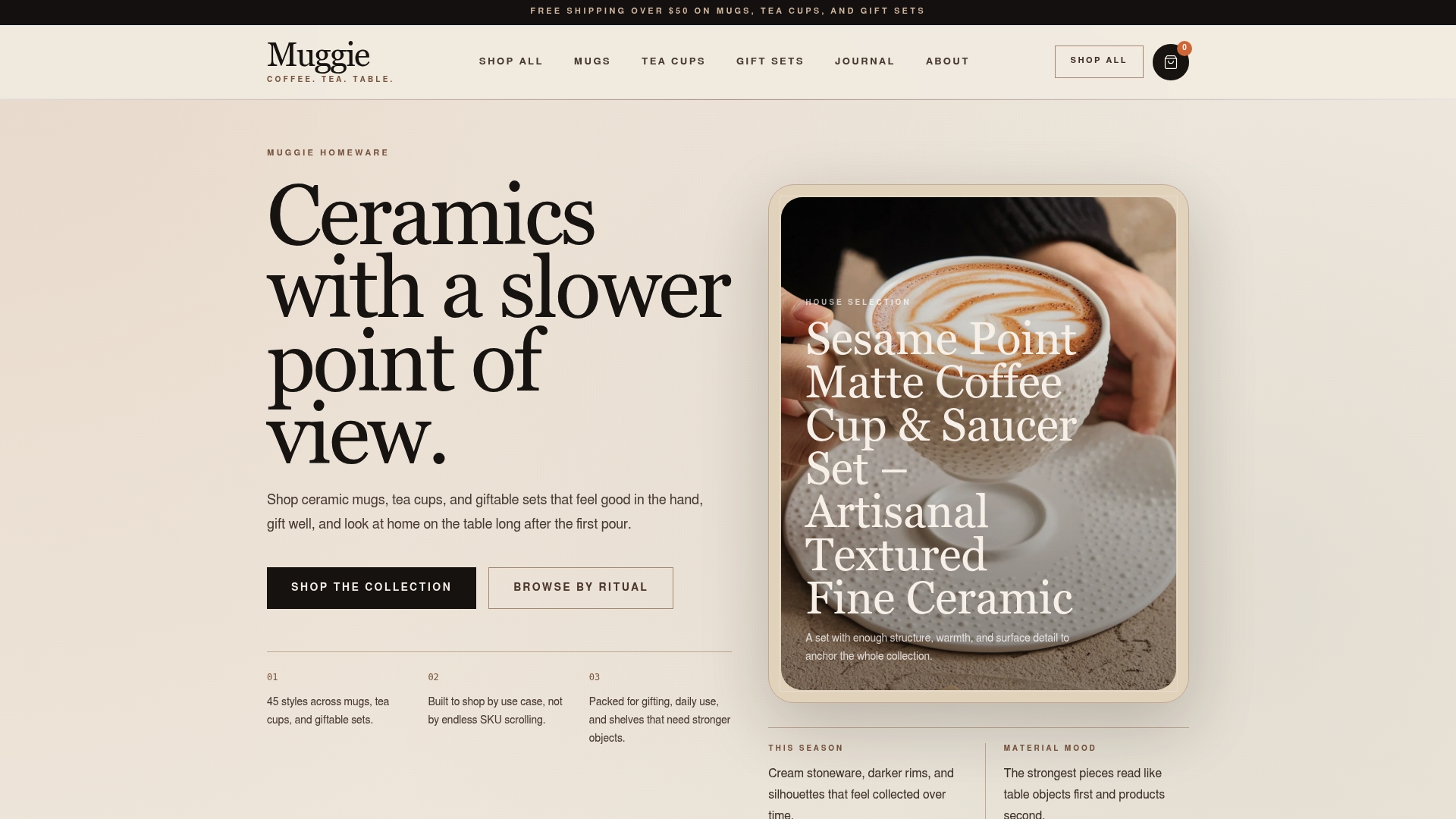
At Muggie, every piece is selected for its artisanal quality, food-safe materials, and daily usability. Whether you are searching for a birthday gift, a wedding present, or something personal for a close friend, the curated gift sets make the selection process genuinely enjoyable. For tea lovers in particular, the range of handcrafted tea cups offers something elegantly different from what you'll find in mainstream homewares. If you want something truly distinctive, the kiln change flame mug is a conversation piece and a daily pleasure in one remarkable object. Explore the full collection and find a gift that will be used, appreciated, and remembered.
Frequently asked questions
Are all handmade ceramics safe to use for food and drink?
No, always check for food-safe, lead-free and non-toxic labels before gifting handmade ceramics, as decorative pieces may use glazes not suitable for contact with food or liquid.
What's the best way to ship fragile ceramic gifts?
Double-box ceramics with 2 to 3 inches of cushioning on all sides, fill every void space to prevent movement, and label the outer box clearly as fragile.
Can handmade ceramics go in the dishwasher and microwave?
Most stoneware and porcelain ceramics with low porosity can, but highly porous clay pieces above 3% porosity should be hand washed to prevent micro-cracking and moisture damage.
How do you assemble a ceramic gift set for a special occasion?
Combine complementary items such as matching cups and a small tray or pouring vessel, keep the colour palette cohesive, add a handwritten personal note, and use quality protective packaging for a presentation that feels considered from start to finish.
Should you include care instructions with gifted ceramics?
Yes, a brief care card helps the recipient enjoy and maintain their ceramics safely and for longer, and including care instructions inside the packaging is considered best practice by experienced makers and shippers alike.