TL;DR:
- Small batch ceramics are handmade, unique, and carry personal signatures from the maker.
- They are made through a detailed process involving sourcing, shaping, firing, and glazing.
- Choosing and caring for small batch ceramics enhances their longevity and emotional value.
There is a quiet revolution happening on breakfast tables across Australia. More people are reaching past the uniform rows of identical mugs at chain homeware stores and asking a different question entirely: who made this, and how? Small batch ceramics sit at the intersection of craft, intention, and beauty, offering something mass production simply cannot replicate. Each piece carries the fingerprints of its maker, the personality of its glaze, and the story of a process done slowly and with care. This guide will help you understand what small batch ceramics truly are, how they are made, and how to choose and look after pieces that will become part of your daily ritual for years to come.
Table of Contents
- What is small batch ceramic?
- How small batch ceramics are made
- Small batch versus mass-produced ceramics: What to know
- Choosing and caring for small batch ceramics
- Why small batch ceramics will shape mindful living in 2026
- Explore unique small batch ceramics from Muggie
- Frequently asked questions
Key Takeaways
| Point | Details |
|---|---|
| Truly unique pieces | Each small batch ceramic is handcrafted, resulting in one-of-a-kind details and personality. |
| Mindful living | Using small batch ceramics brings intention and beauty to daily rituals like tea or coffee. |
| Lasting quality | With proper care, small batch ceramics offer durability and heirloom potential. |
| Perfect for gifting | Their story and craftsmanship make them stand-out, memorable presents for loved ones. |
What is small batch ceramic?
The phrase "small batch" gets used freely in food, coffee, and craft beer culture, but in ceramics it carries a very specific meaning. A small batch ceramic piece is one made in a limited run, typically by a single maker or a very small studio team, with minimal industrial input. Where a factory might produce ten thousand identical mugs in a single day, a small batch ceramicist might produce twenty to fifty pieces across a full week of work. That difference in scale changes everything about the outcome.
The most immediate contrast is consistency. Mass-produced ceramics are engineered for uniformity. Every dimension, colour, and surface texture is standardised so that the item you buy in Brisbane looks exactly like the one sold in Melbourne. Small batch work is the opposite. What defines small batch ceramics is precisely this individuality: two mugs thrown from the same clay on the same afternoon will still behave slightly differently in the kiln, catching the glaze unevenly or warping just a fraction at the rim. These are not flaws. They are signatures.
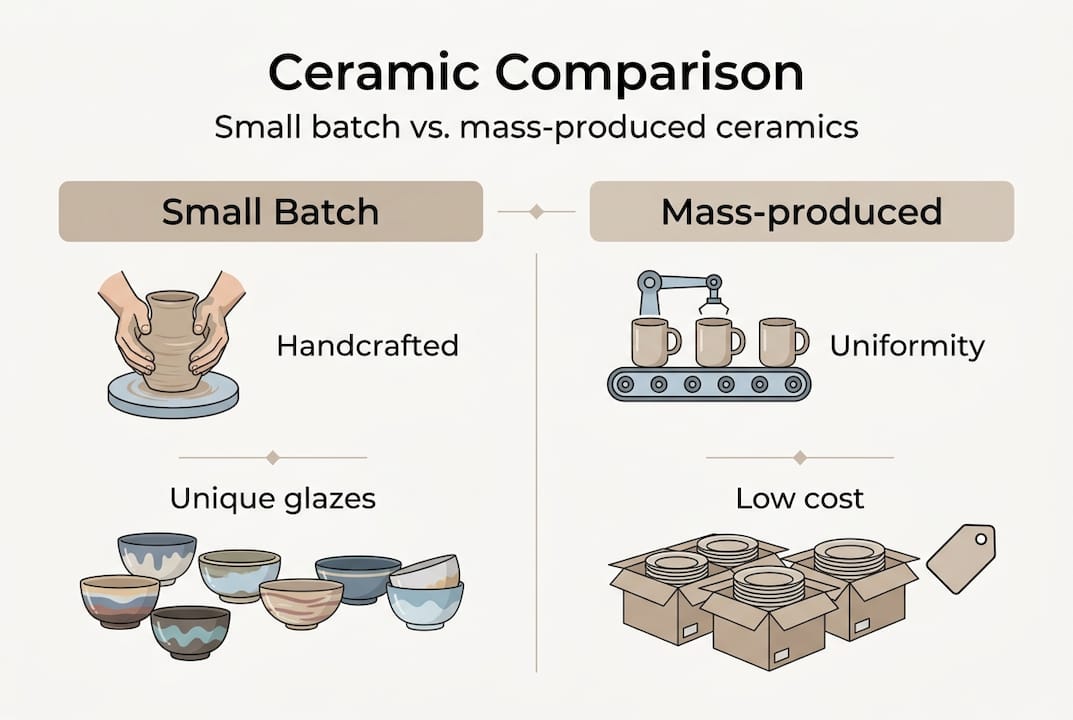
Quality is another defining feature. When a ceramicist works in small batches, every piece receives close personal attention. The maker can feel the wall thickness as they throw the pot, notice a weakness before it becomes a crack, and decide whether a piece is good enough to leave the studio. That judgement does not exist on a production line. A small batch piece that reaches your hands has been evaluated by a human eye that cares about it.
There is also an important ecological dimension. Small batch ceramics tend to use locally sourced or responsibly chosen clays, produce far less waste than industrial operations, and avoid the chemical shortcuts that large-scale factories rely on for speed and uniformity. Many small batch studios in Australia are conscious of their material footprint in ways that simply do not factor into mass manufacturing.
Here is what you can expect from genuine small batch ceramics:
- Unique appearance: No two pieces are identical, even from the same batch
- Handcrafted construction: Made by hand or with minimal mechanical assistance
- Traceable origins: You can often find out who made the piece and where
- Signature glazes: Colours and surfaces developed by the individual maker
- High quality materials: Food-safe clays and glazes selected for performance and aesthetics
- Eco-conscious production: Smaller environmental footprint than industrial alternatives
- Limited availability: Once a batch is gone, that exact expression may never recur
"A handcrafted ceramic piece is not a product. It is a decision made by someone who cared enough to make it slowly." This distinction is what draws small batch examples like kiln-glazed cups into the homes of people who want more than function from their tableware.
How small batch ceramics are made
Now that you know what small batch ceramics are, let us look at how they are actually made. The process is more involved than most people realise, and understanding it gives you a far deeper appreciation for what lands in your hands.
-
Sourcing and preparing the clay. Ceramicists choose their clay bodies carefully. Different clays fire at different temperatures and produce different textures. Stoneware is popular for its durability and earthy character, while porcelain gives a finer, more translucent result. The clay is wedged by hand to remove air bubbles, a step that prevents pieces from cracking during firing.
-
Forming the piece. This is where the maker's skill is most visible. Hand-throwing on a wheel gives pieces their organic curves and subtle wall variations. Alternatively, some makers use hand-building techniques like coiling or slab construction for more geometric forms. Some use moulds, but in genuine small batch work, the maker is still handling and finishing each piece individually, not simply pulling identical shapes from a machine.
-
Drying and trimming. Freshly formed pieces are left to dry slowly and evenly. Rushing this stage causes cracking. Once leather-hard, the ceramicist trims the base, refines the foot ring, and attaches handles. This is painstaking, precise work.
-
Bisque firing. The dried pieces go into the kiln for their first firing, which burns off moisture and organic matter and turns the clay into a porous ceramic. This stage stabilises the piece before glazing.
-
Glazing. Glazes are liquid suspensions of minerals that melt in the kiln to form glass-like surfaces. Small batch ceramicists develop their own glaze recipes over years of experimentation, and the slow ceramics movement has seen renewed interest in traditional glaze techniques like ash glazing and wood firing that produce deeply unpredictable, beautiful results.
-
Glaze firing. The glazed pieces are fired again at high temperature, anywhere from 1000°C to over 1300°C depending on the clay body. The kiln atmosphere, temperature, and even the position of pieces inside the kiln all influence the final result. This is why two pieces from the same batch can look subtly different.
-
Inspection and finishing. Every piece is checked for structural integrity, glaze quality, and overall character. Those that do not meet the maker's standard are set aside or recycled. This quality gate simply does not exist in mass production.
Consumer interest in this kind of careful, intentional making is growing noticeably. The trend toward artisan goods reflects a broader shift away from disposable culture toward objects made to last and to be appreciated.
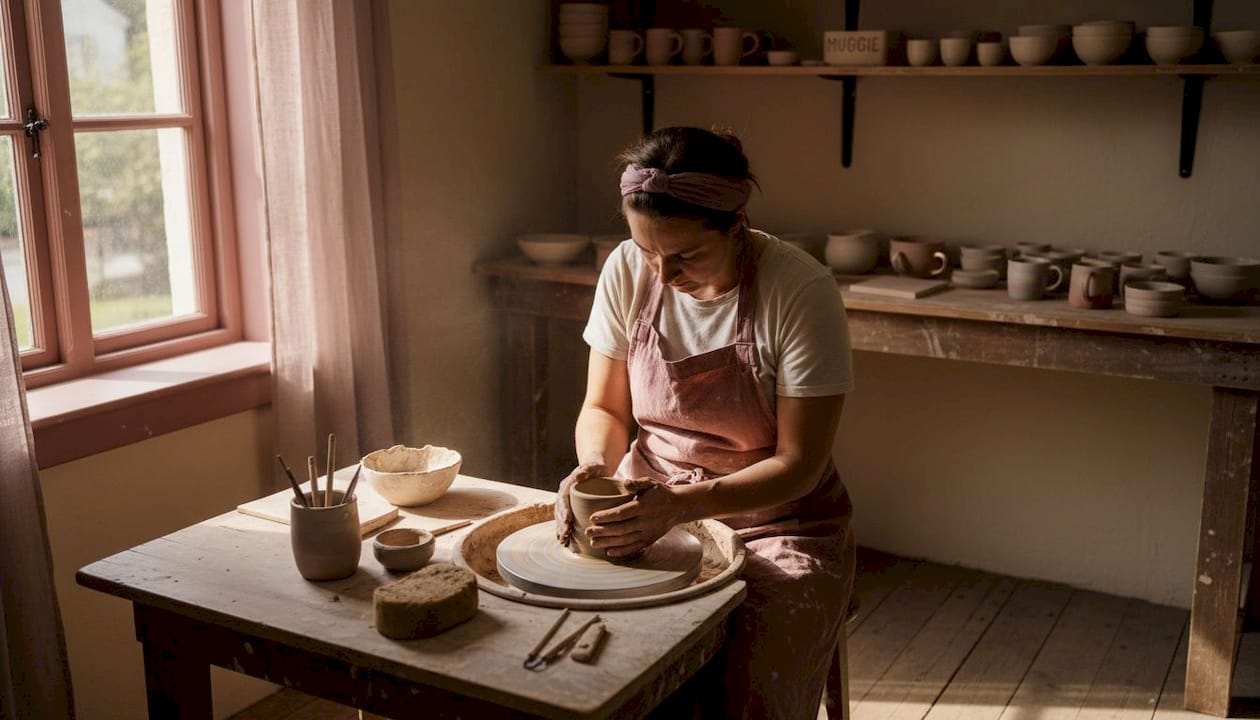
Pro Tip: When you pick up a handcrafted ceramic, turn it over. A small batch piece will often have a maker's mark, a number, or slight tool marks on the foot ring. Run your finger around the inside of the rim. If it feels perfectly uniform and glassy, it is likely mass produced. If there is a subtle variation in thickness or texture, that is the maker's hand.
Small batch versus mass-produced ceramics: What to know
Understanding the process shows the care involved. Next, let us see how small batch ceramics measure up against conventional options across the things that matter most to buyers.
| Feature | Small batch ceramics | Mass-produced ceramics |
|---|---|---|
| Uniqueness | Every piece is individual | Identical across production runs |
| Quality control | Maker evaluates each piece personally | Automated or minimal inspection |
| Price | Higher due to time and skill | Lower due to scale |
| Environmental impact | Generally lower footprint | High volume waste and energy use |
| Traceability | Often traceable to maker and studio | Supply chain typically opaque |
| Durability | High quality materials, built to last | Variable, often lower durability |
| Emotional value | Carries story and connection | Minimal personal significance |
There are honest reasons why someone might choose mass-produced ceramics. Price is the most obvious. Budget constraints are real, and a factory-made mug at a fraction of the cost serves its functional purpose. Consistency also matters for certain contexts, such as catering or hospitality where matching sets are essential. Nobody is suggesting that every cup in a café kitchen needs to be a hand-thrown artisan piece.
But the calculus shifts when you are buying for yourself or for someone you care about. Handmade ceramics in gifting carry an emotional weight that a factory item simply cannot replicate. When you give someone a handcrafted piece, you are giving them a story: a specific maker, a specific glaze decision, a specific moment in a kiln. That story becomes part of every morning they use the piece.
Consider these situations where small batch clearly wins:
- Gifting: A beautiful artisan mug or artisan tea set communicates thoughtfulness in a way a chain-store purchase cannot
- Daily ritual: Using a piece you love makes even an ordinary Tuesday morning feel considered
- Collectors: For those who appreciate craft, small batch pieces are genuine objects of art
- Sustainability-minded buyers: Investing in a durable, well-made piece reduces the cycle of cheap replacements
- Slow living advocates: The ritual of using something beautiful reinforces intentional habits
The price difference is also less dramatic than many people expect. A quality small batch mug that lasts a decade costs far less per use than a cheap item that chips, fades, or simply disappoints within months.
Choosing and caring for small batch ceramics
With a clear comparison in place, it is time to look at how to choose and care for small batch ceramics in a way that makes them last.
When buying, the first thing to look at is provenance. Reputable sellers will tell you where a piece was made and by whom. If that information is absent, ask. A good ceramicist or a shop that genuinely values craft will welcome the question. Look also for selecting unique teacups with embossed or carved detail, as this level of hand work is a strong indicator of genuine artisan making.
Physically handling the piece before purchase, when possible, is invaluable. Feel the weight. Is it consistent with good-quality stoneware or porcelain? Run your thumb along the handle join. On a mass-produced piece, joins are often mechanical and abrupt. On a handmade piece, the transition tends to feel considered and smooth.
The best small batch ceramics for gifting:
- Mugs: Everyday use, highly personal, wide range of styles and sizes
- Tea cups: Particularly suitable for those who enjoy a daily tea ritual
- Matcha bowls: Beautiful, functional, and increasingly popular with wellness-focused buyers
- Tea sets: The most generous gift option, combining multiple pieces into a coherent ritual
- Small plates and bowls: Useful and beautiful additions to any table setting
Once you have chosen your pieces, caring for them properly keeps them beautiful for years. For handcrafted mug care, the most important rule is gentle handling. Avoid stacking mugs inside each other unless you have protective pads between them, as this is how chips start. Most quality small batch ceramics are food-safe and dishwasher-friendly, but hand washing with mild detergent preserves glaze surfaces longer, particularly on pieces with reactive or specialty glazes.
Avoid sudden temperature changes where possible. Pouring boiling water directly into a cold ceramic cup repeatedly over many years can stress the clay body. Warming the cup first with a small amount of hot water before brewing your tea or coffee is a simple habit that makes a real difference.
If a piece chips, do not discard it. Look into the Japanese practice of kintsugi, where breaks are repaired with gold-coloured lacquer, celebrating the history of the piece rather than hiding it. It is a beautiful philosophy that aligns perfectly with the values behind small batch ceramics.
Pro Tip: Store your small batch ceramics so they are visible. Keeping them on an open shelf rather than hidden in a cupboard means you reach for them every day, building the daily ritual that makes artisan tableware genuinely worthwhile.
Why small batch ceramics will shape mindful living in 2026
Fast consumer culture has quietly trained us to undervalue the objects we use every day. We swap out cups when a new colour trend arrives, discard mugs when they seem dated, and rarely give a second thought to what our tableware says about how we choose to live. Small batch ceramics push back against this in a deeply practical way.
When you use a piece made by someone's hands, the act of drinking your morning coffee shifts. The object holds attention. You notice the glaze pooling at the base, the slight irregularity in the rim, the warmth the form holds in your hand. That noticing is the beginning of mindfulness, not as a practised technique but as a simple response to beauty.
Embracing slow living through deliberate object choices is not about spending more. It is about spending differently, and with more awareness. Small batch ceramics are an antidote to throwaway culture precisely because their imperfections are their value. The world is moving toward more traceable, meaningful, handcrafted goods, and those who choose this path now are building daily rituals that genuinely nourish them, morning by morning.
Explore unique small batch ceramics from Muggie
Ready to find pieces that transform your morning ritual or become a genuinely memorable gift? Muggie brings together a carefully curated selection of handcrafted Australian ceramics, each chosen for quality, character, and daily functionality.
Discover the beautiful floral Ru Tea Set for an elegant tea experience, or explore the delicately detailed embossed ceramic teacup that pairs tradition with artisan skill. If you are shopping for someone special, the range of ceramic gift sets makes finding a thoughtful, beautiful present genuinely simple. Every piece in the Muggie collection is food-safe, designed for daily use, and chosen because it brings something worth savouring to your table.
Frequently asked questions
What makes small batch ceramics unique?
Small batch ceramics are handcrafted in limited runs, making each piece distinct with its own character, glaze variation, and quality details that factory production cannot replicate.
How do I know if a ceramic piece is small batch?
Look for maker marks, unique glaze patterns, and subtle variations in form, and ask about origin since reputable artisan pieces will always have traceable backgrounds.
Are small batch ceramics suitable as gifts?
Yes, their unique design and the story behind each piece make them especially thoughtful, and handmade ceramics as gifts carry an emotional weight that mass-produced items simply cannot match.
Can I use small batch ceramics every day?
Absolutely. With proper care, small batch ceramics are both beautiful and highly practical, and daily use of artisan ceramics is exactly what most makers design and intend for their work.