
TL;DR:
- Dishwasher safe labels indicate short-term resistance, not indefinite durability for ceramics.
- Porcelain and stoneware are more dishwasher durable than earthenware due to higher firing temperatures and lower porosity.
- Proper care, including gentle cycles and avoiding sudden temperature changes, extends the lifespan of ceramics.
That little 'dishwasher safe' label on your favourite mug might be giving you a false sense of security. Many ceramics carry this claim, yet the reality is far more nuanced than a simple stamp of approval suggests. Whether you're buying a handcrafted piece for your own kitchen ritual or choosing a thoughtful gift, understanding what dishwasher safety actually means for ceramics can save you from cracked glazes, faded colours, and disappointing wear. This guide walks you through the science, the ceramic types, the production techniques, and the everyday habits that genuinely protect your pieces for years to come.
Table of Contents
- What does 'dishwasher safe' actually mean for ceramics?
- Types of ceramics: which are truly dishwasher safe?
- How firing, glazing, and craftsmanship impact dishwasher safety
- Care tips to maximise the life of dishwasher safe ceramics
- Why careful care matters more than labels for cherished ceramics
- Discover artisanal, dishwasher safe ceramics for home and gifts
- Frequently asked questions
Key Takeaways
| Point | Details |
|---|---|
| Label nuances matter | ‘Dishwasher safe’ often only covers short-term use, so check specifics before daily use. |
| Porcelain prevails | Porcelain ceramics resist wear in dishwashers far longer than stoneware or earthenware. |
| Craftsmanship affects safety | High-temperature firing and durable glazes make ceramics more reliably dishwasher safe. |
| Care extends lifespan | Gentle cycles, mild detergents, and careful loading help ceramics last for years. |
| Handwashing is best | Valuable and handmade pieces benefit most from cautious handwashing, even if labelled ‘safe’. |
What does 'dishwasher safe' actually mean for ceramics?
The phrase 'dishwasher safe' sounds reassuring, but it rarely tells the full story. For ceramics, it typically means the piece can survive a standard wash cycle without immediately cracking, warping, or leaching harmful substances. Notice the word immediately. That is a very different promise from lasting beautifully through hundreds of washes.
Manufacturers test their products under controlled conditions, often for a limited number of cycles. The label reflects short-term resistance, not a lifetime guarantee. Labels indicate short-term safety, and many artisans and ceramics experts still recommend handwashing for longevity, even when a piece carries the dishwasher safe mark.
Here are some of the most common misconceptions buyers hold about dishwasher safe labels:
- 'Dishwasher safe' means the piece will last forever in the dishwasher. It does not. Cumulative heat, water pressure, and detergent exposure wear ceramics down over time.
- All ceramics with the label are equal. Firing temperature, glaze type, and clay body all affect real-world durability far more than any label.
- Handmade ceramics with the label are just as safe as factory-produced ones. Artisanal pieces often use decorative glazes or surface treatments that are more vulnerable to dishwasher conditions.
- Dishwasher safe means microwave safe too. These are entirely separate properties.
"Even pieces that carry a dishwasher safe label benefit enormously from occasional handwashing. The label is a minimum standard, not an invitation to ignore care entirely." — Ceramics artisan perspective
Pro Tip: When buying ceramics, especially handmade ones, ask the maker or retailer about the firing temperature and glaze type. A piece fired above 1200°C with an in-glaze finish will genuinely outperform one with a lower-temperature overglaze, regardless of what the label says. For more on caring for ceramic mugs, it pays to know the details before you commit to a cleaning routine.
Types of ceramics: which are truly dishwasher safe?
Not all ceramics are created equal, and the differences matter enormously when it comes to dishwasher performance. The three main types you'll encounter are porcelain, stoneware, and earthenware, each with distinct properties that affect how they handle repeated machine washing.
Porcelain and stoneware are generally safer for dishwashers than earthenware, largely because of their higher firing temperatures and lower porosity. Earthenware is fired at lower temperatures, leaving it more porous and more vulnerable to water absorption, which accelerates wear and can cause cracking over time.
| Ceramic type | Typical firing temp | Porosity | Dishwasher durability |
|---|---|---|---|
| Porcelain | 1260°C to 1400°C | Very low | Excellent (500+ cycles) |
| Stoneware | 1180°C to 1280°C | Low to medium | Good (up to ~300 cycles) |
| Earthenware | 900°C to 1150°C | High | Poor to moderate |
Porcelain shows minimal wear after 500+ cycles, making it the top performer for frequent dishwashing. Stoneware holds up well to around 300 cycles before crazing (fine surface cracks in the glaze) becomes noticeable, though it tends to chip less than porcelain when knocked. Earthenware, while beautiful and often used in artisanal work, is the least suited to regular machine washing.
For homeowners and gift buyers, here is what these differences mean in practice:
- Porcelain pieces are ideal for daily-use mugs and tea cups that will be machine washed regularly.
- Stoneware pieces offer a warmer, more tactile feel and are a strong choice for everyday use with moderate dishwasher exposure.
- Earthenware pieces are best reserved for occasional use or handwashing, especially if they feature decorative glazes.
- Handmade pieces in any category deserve extra care, as individual craftsmanship variables can affect durability beyond what the clay type alone suggests.
Exploring ceramic mug styles with these distinctions in mind helps you choose pieces that will genuinely suit your lifestyle. And once you've chosen well, following solid ceramic care tips will protect your investment.
How firing, glazing, and craftsmanship impact dishwasher safety
Beyond the type of clay, the way a ceramic piece is made has a profound effect on how it holds up in the dishwasher. Two mugs made from the same clay body can perform very differently depending on how they were fired and glazed.
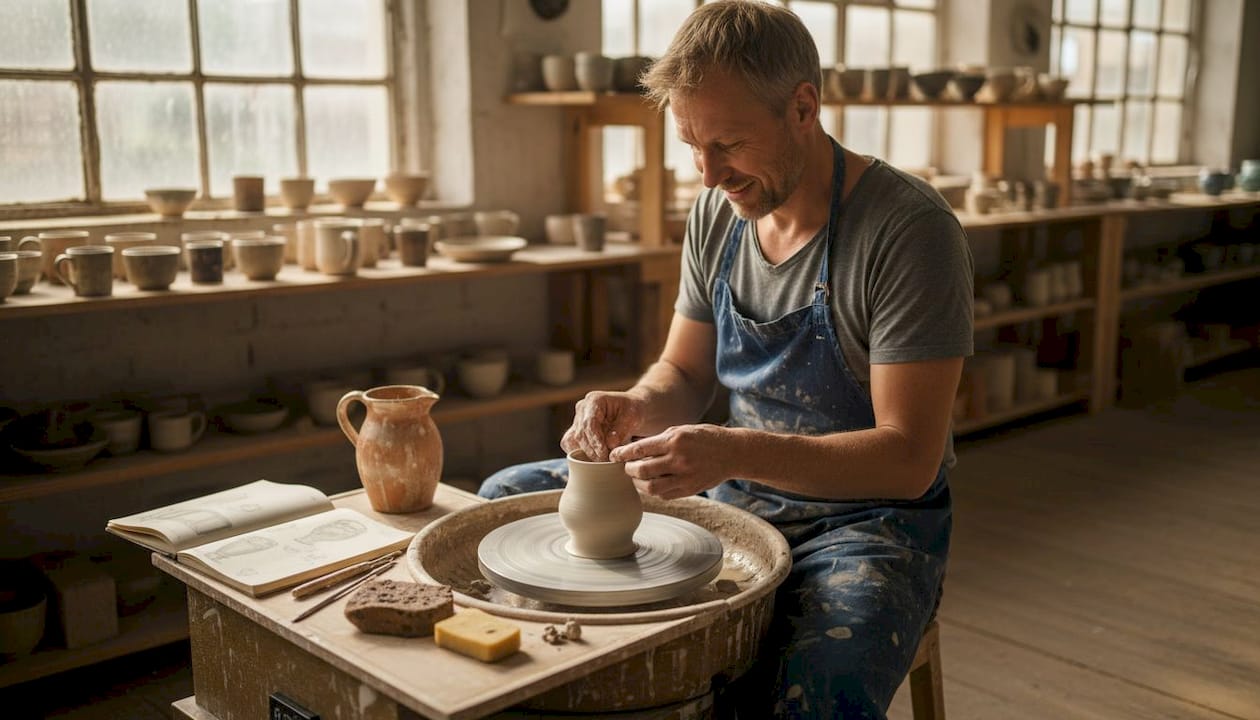
High-temperature vitrification, the process of firing clay above 1200°C until it becomes glass-like and dense, dramatically reduces water absorption. Less water absorption means less swelling, less stress on the glaze, and far less wear over time. Durable glazes, particularly in-glaze and underglaze types, are also critical because they bond more deeply with the clay body rather than sitting on the surface where they are vulnerable to detergent and heat.
| Production factor | What to look for | Why it matters |
|---|---|---|
| Firing temperature | Above 1200°C | Reduces porosity and water absorption |
| Glaze type | In-glaze or underglaze | More resistant to detergent and heat |
| Water absorption rate | Below 3% | Indicates low porosity and high durability |
| Clay body density | Dense, non-porous | Less vulnerable to thermal stress |
Here is how skilled artisans approach making a genuinely dishwasher safe ceramic piece:
- Select a low-porosity clay body suited to high-temperature firing, such as porcelain or high-fire stoneware.
- Apply glaze before or during the firing process rather than on top of an already-fired surface, creating a stronger bond.
- Fire to the correct temperature for the clay and glaze combination, ensuring full vitrification.
- Test finished pieces for water absorption and glaze adhesion before labelling them as dishwasher safe.
- Avoid purely decorative surface treatments on pieces intended for regular machine washing, as these are far more fragile.
Pro Tip: When buying a handmade ceramic as a gift, ask the maker whether the glaze is an in-glaze or overglaze finish. Overglaze decoration, while often stunning, sits on the surface and is more likely to fade or lift with repeated dishwasher use. For ceramic craftsmanship that genuinely stands up to daily life, the production process matters as much as the finished look.
Care tips to maximise the life of dishwasher safe ceramics
Even the most durable ceramic benefits from thoughtful care. Knowing how to load, wash, and store your pieces correctly can add years to their life and keep glazes looking vibrant.
Even 'safe' pieces last longer with gentle cycles, mild detergents, and careful loading. Harsh detergents with strong alkaline formulas are particularly damaging to glazes over time, and high-heat drying cycles accelerate wear on both the clay body and the glaze surface.
Here are the key do's and don'ts for washing artisanal ceramics in the dishwasher:
Do:
- Use a gentle or eco cycle with lower water temperature.
- Choose a mild, low-alkaline detergent.
- Place pieces securely so they don't knock against each other during the cycle.
- Allow pieces to cool gradually rather than exposing them to sudden temperature changes.
- Handwash pieces occasionally to give glazes a rest from machine conditions.
Don't:
- Overload the dishwasher, which increases the risk of chipping from contact.
- Use metal utensils or scourers on ceramic surfaces.
- Select high-heat drying settings for handmade or decorative pieces.
- Wash pieces with gold or metallic detailing in the dishwasher at all.
- Assume that 'dishwasher safe' means any cycle, any detergent, any load.
Pro Tip: If you're giving a ceramic piece as a gift, tuck a small care card inside the packaging. A simple note explaining the best washing approach shows genuine thoughtfulness and helps the recipient get the most from their present. For a full ceramic care guide, the details are worth sharing.
Why careful care matters more than labels for cherished ceramics
Here is an uncomfortable truth that the ceramics industry rarely advertises: every cleaning method, whether handwashing or machine washing, will wear your ceramics down eventually. The dishwasher is not the villain it is sometimes made out to be. In fact, dishwashers may cause less variable wear than handwashing in some situations, because they apply consistent conditions rather than the unpredictable scrubbing and temperature changes of hand cleaning.
What actually makes the biggest difference is how you use the dishwasher. Detergent choice, cycle temperature, and loading habits matter far more than whether you choose machine or hand washing. Conventional wisdom says dishwasher safe means set-and-forget. Real-world experience says attentive care, regardless of method, is what keeps cherished pieces looking beautiful.
For gift-givers, this insight is particularly valuable. Including a brief note on care for mugs with an artisanal ceramic gift is not fussy. It is a quiet signal that you understand the craft behind the piece and respect the recipient enough to help them enjoy it fully. That small gesture elevates the gift from a pretty object to something genuinely considered.
Discover artisanal, dishwasher safe ceramics for home and gifts
If this guide has inspired you to be more intentional about the ceramics in your home or the gifts you choose, there is a wonderful place to start looking.
At Muggie, every piece in the collection is handcrafted with daily use in mind. The handmade ceramic mugs are made from food-safe, dishwasher-friendly materials that balance artisanal beauty with genuine practicality. Whether you're browsing the full ceramic mug range for your own slow morning ritual or searching for something meaningful to give, the giftable ceramic sets offer a curated, thoughtful option that arrives ready to impress. Quality you can feel, care that lasts.
Frequently asked questions
Can all ceramics with 'dishwasher safe' labels go in the dishwasher indefinitely?
No. Most ceramics labelled 'dishwasher safe' handle routine washes well but will show wear over time. Labels cover short-term use, not indefinite durability, so attentive care still matters.
Which ceramic type lasts longest in the dishwasher?
Porcelain generally outperforms other types, showing minimal wear after 500+ dishwasher cycles. Stoneware follows, while earthenware is least suited to frequent machine washing.
What is the safest way to clean valuable artisanal ceramics?
Handwashing with a mild detergent and avoiding sudden temperature changes is safest. Artisans recommend handwashing high-value pieces to minimise cumulative wear from machine conditions.
How can I tell if a ceramic piece is truly dishwasher safe?
Look for high-temp firing above 1200°C, low water absorption, and durable in-glaze or underglaze finishes. When in doubt, ask the maker or retailer directly.
Recommended
- Ceramics for Slow Coffee and Tea
- Flame Ceramic Mug – Handmade Warm Tones Unique Design | Muggie
- Blue 225ml Ceramic Kiln Glazed Coffee Latte Art Cup – Retro Style Matcha Bowl | Muggie
- Beige 225ml Ceramic Kiln Glazed Coffee Latte Art Cup – Retro Style Matcha Bowl | Muggie
- Oven Dish Pyrex 234B000/5014 | OnlineStore24 EU - Envío Rápido
- Designer Mugs - Unique and Stylish Designs for Every Occasion