
TL;DR:
- Everyday ceramicware refers to durable, functional pieces designed for frequent use rather than decorative appeal. Choosing materials like stoneware, porcelain, or bone china ensures practicality, comfort, and longevity for daily routines. Proper care and mindful selection enhance the life and meaning of artisan ceramics, making them an integral part of mindful living.
Why do some favourite mugs thrive through thousands of morning coffees, while others crack, craze, or quietly migrate to the back of the cupboard? The answer usually comes down to whether they were ever truly designed for everyday use in the first place. Many people confuse decorative ceramics with genuinely practical options, buying on looks alone and then wondering why a piece disappoints in daily life. This guide cuts through that confusion, explaining what everyday ceramicware actually means, which materials and types hold up best, and how to choose, use, and care for pieces that fit real Australian home routines.
Table of Contents
- Defining everyday ceramicware: beyond looks
- Types of ceramicware materials: strengths and trade-offs
- Practical essentials: choosing and using everyday ceramicware
- Caring for everyday ceramics: maintenance, safety, and troubleshooting
- A mindful approach to daily ceramicware: what most guides miss
- Bring everyday ceramicware into your home
- Frequently asked questions
Key Takeaways
| Point | Details |
|---|---|
| Everyday definition | Everyday ceramicware means durable, practical pieces you reach for routinely, not just for show. |
| Material matters | Your choice of stoneware, porcelain, or earthenware impacts chip resistance and ease of use. |
| Care and safety | Check for intact glaze and follow care instructions to keep ceramics long-lasting and safe. |
| Practical beauty | Select ceramics that are both comfortable and pleasing in daily rituals for lasting enjoyment. |
| Mindful choices | Intentional choices in ceramicware add meaning to routines, support wellness, and reduce waste. |
Defining everyday ceramicware: beyond looks
The word "everyday" gets used loosely in homeware marketing, which is part of the problem. A mug can look handcrafted and artisan without being built for daily use. A bowl can look sturdy while hiding a glaze that stains after a week of morning porridge.
Everyday ceramicware generally means functional ceramic tableware intended for frequent daily use, chosen for durability, practicality, and easy care rather than collectible or purely decorative value. That definition is more useful than it first appears. It shifts the focus away from aesthetics and toward performance, though the two absolutely can coexist.
Here is what sets everyday ceramicware apart from decorative pieces:
- Durability under repeat use: designed to handle daily washing, stacking, and handling without chipping or fading
- Comfort in the hand: weight, grip, and handle design matter when you hold a mug twice before 9am
- Food-safe glazing: fully sealed, non-porous glaze that does not leach into food or drink
- Practical dimensions: sizes and shapes suited to real meals, real cups of tea, and real kitchens
- Manageable care requirements: whether that means dishwasher safety or a simple hand-wash routine
"The most enduring everyday ceramics are the ones you stop noticing consciously and simply reach for. They disappear into routine while quietly making it better."
For slow living enthusiasts, the distinction matters even more. Handmade ceramic mugs can absolutely qualify as everyday pieces, provided the maker has designed them with durability and food safety in mind. The artisan origin does not disqualify a piece. It simply means you need to ask the right questions before buying.
Everyday ceramicware also reflects your lifestyle values. Choosing pieces that are both beautiful and functional is not indulgent. It is intentional. That is the whole point.
Types of ceramicware materials: strengths and trade-offs
With a clear understanding of what everyday ceramicware is, it is time to compare the main types you will come across and how they hold up with regular use. The choice of ceramic material depends on trade-offs like porosity, chip resistance, and care requirements. Knowing each type saves you from expensive mistakes.
| Material | Durability | Weight | Care requirements | Best for |
|---|---|---|---|---|
| Earthenware | Lower, prone to chipping | Heavy | Hand-wash preferred | Casual display, occasional use |
| Stoneware | High, chip-resistant | Medium to heavy | Often dishwasher safe | Daily meals, mugs, all-purpose use |
| Porcelain | High when quality made | Light to medium | Usually dishwasher safe | Elegant daily use, tea rituals |
| Bone china | Surprisingly tough | Very light | Usually dishwasher safe | Refined everyday or gifting use |
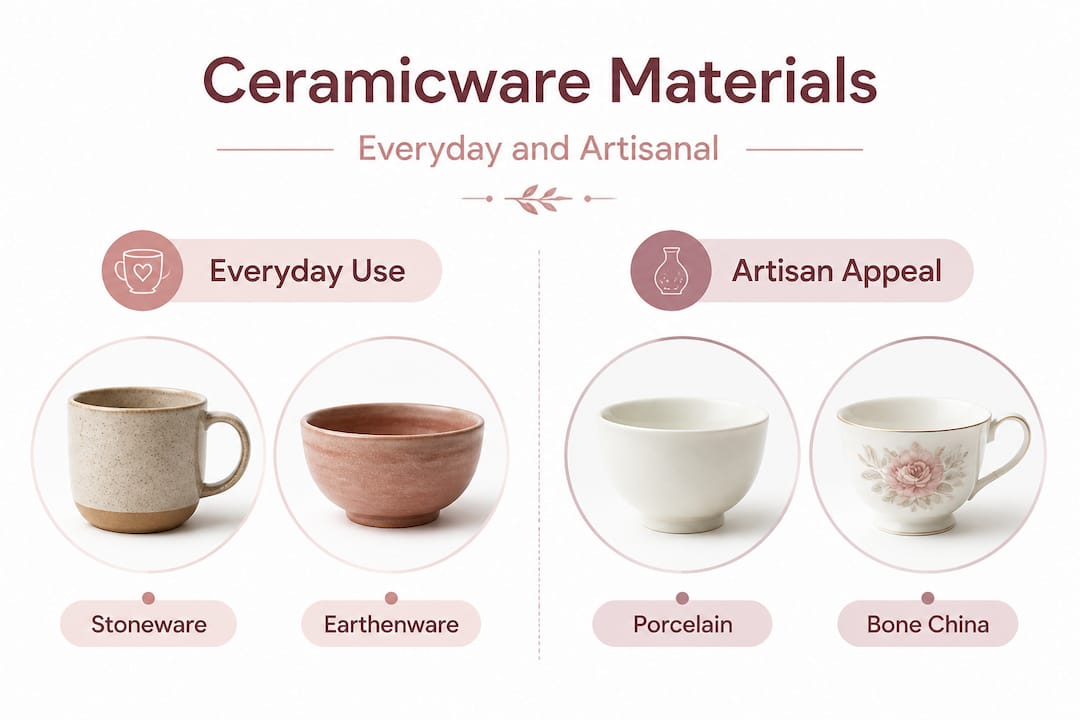
Earthenware is the oldest ceramic style and it has warmth and character. However, it fires at lower temperatures, leaving it more porous and prone to absorbing liquids if the glaze is not perfect. For everyday use in active Australian kitchens, earthenware requires more care than most people expect.
Stoneware is the everyday hero, and for good reason. It fires at high temperatures, which makes it dense, durable, and largely non-porous. Stoneware handles the microwave, most dishwashers, and the occasional bump on the kitchen bench without complaint. Most daily ceramic coffee mugs designed for genuine daily use are stoneware for exactly this reason.

Porcelain is made from refined kaolin clay fired at very high temperatures, producing a smooth, glassy finish. Despite its elegant appearance, quality porcelain is genuinely hard and durable. It is also lighter than stoneware, which some people strongly prefer.
Bone china adds bone ash to the porcelain mix, creating a translucent, ivory finish that is thin and refined. It looks delicate but is actually one of the most chip-resistant ceramic types available. Bone china is an excellent choice if you want everyday pieces that feel special.
Pro Tip: If you want one material that handles everything from morning coffee to dishwasher cycles without fuss, start with stoneware. Then add a porcelain or bone china piece for days when you want to slow down and make your tea ritual feel a little more considered.
Practical essentials: choosing and using everyday ceramicware
Having covered your material options, let us talk about exactly how to choose smart pieces and use them every day for meals, morning coffees, or mindful tea breaks.
Everyday ceramicware should handle repeated use with acceptable risk across your household's real routines. That framing is practical and honest. You are not looking for perfection. You are looking for pieces that work reliably in your specific life.
Follow these steps when choosing new everyday ceramics:
- Check the glaze condition: Look for a continuous, sealed glaze with no bare patches or visible cracks. A compromised glaze is a food safety issue, not just a cosmetic one.
- Hold it before you buy: Weight distribution matters. A mug that feels balanced when empty may feel handle-heavy when full of tea. Where possible, try before purchasing.
- Ask about dishwasher and microwave suitability: Never assume. For handmade wares, ask the maker directly. Some artisan glazes are not suited to repeated dishwasher cycles even if the clay body is.
- Consider your actual routines: A wide, shallow mug suits long coffee drinkers. A taller, narrower form holds heat better for tea drinkers. Match the shape to the ritual.
- Think about stacking and storage: If your kitchen storage is tight, heavy or irregularly shaped pieces that do not stack safely will chip faster than pieces designed with practicality in mind.
- Mix and match deliberately: Building a set gradually from different artisan makers can create a beautiful, cohesive table. Just make sure each piece meets your care and safety standards individually.
Knowing how to look after your choices matters as much as the buying decision itself. Good resources on caring for ceramicware will walk you through the specifics of handmade pieces, which often have slightly different needs than mass-produced wares.
It is also worth noting that handmade ceramics may vary slightly from piece to piece in glaze thickness and finish. That variation is part of their character. But it also means each piece may need to be assessed individually rather than assuming all pieces from one maker carry identical care requirements.
Pro Tip: When you receive a new handmade ceramic piece, run it through a gentle hand-wash first before its dishwasher debut. This gives you a chance to spot any glaze irregularities early, before heat and detergent stress the surface.
The dishwasher-safe options available from artisan makers have expanded significantly in recent years, so there is genuinely no need to compromise between beautiful ceramics and an easy clean-up routine.
Caring for everyday ceramics: maintenance, safety, and troubleshooting
Once you have chosen your perfect set, proper care will keep them safe, beautiful, and lasting for years. Good habits matter more than expensive products.
Daily maintenance is straightforward. Warm soapy water and a soft cloth or sponge suit most everyday ceramics. For pieces marked dishwasher safe, use the gentle or eco cycle where possible and avoid harsh detergents that can dull glaze over time.
Crazing in ceramic glazes means fine cracks in the glaze surface that can trap staining and odours. More importantly, compromised glazes may reduce food safety for regular use, particularly when repeatedly exposed to heat and moisture. A crazed mug is not automatically a disposal. But it should come off the daily rotation for hot drinks.
Buying handmade ceramics for daily rituals means validating care and safety specifics per piece, including dishwasher and oven suitability, glaze safety, and how to handle surface issues, because handmade work can vary slightly piece to piece. Ask your maker or retailer for this information upfront.
Here are the key care principles to follow:
- Wash gently after each use: Do not leave ceramics soaking for extended periods, especially earthenware
- Avoid sudden temperature changes: Pouring boiling water into a cold mug stresses the glaze and can trigger crazing over time
- Store with care: Use soft stacking pads or simply leave space between pieces to reduce chipping during storage
- Inspect regularly: A quick visual check every few months helps catch early crazing or chips before they become a safety concern
- Retire compromised pieces thoughtfully: Crazed or chipped ceramics work beautifully as plant pots, pen holders, or shelf decorations
| Issue | Action for food use | Alternative use |
|---|---|---|
| Minor chip on rim | Retire from drinking use | Plant pot or display |
| Crazing (fine glaze cracks) | Remove from hot drink rotation | Pencil holder or decorative piece |
| Stain on glaze | Try bicarbonate of soda paste | Continue use if glaze intact |
| Bare clay patches | Retire from food use immediately | Display or garden use only |
For ceramic care tips specific to artisan and handmade pieces, it is worth doing a little extra research when you bring a new piece home. The investment of five minutes in understanding one piece can add years to its useful life.
A mindful approach to daily ceramicware: what most guides miss
Most guides on ceramicware stop at materials and dishwasher ratings. That is useful, but it misses something important for people who are drawn to artisan pieces as part of a slower, more intentional way of living.
Everyday ceramicware is not just functional equipment. It is part of daily ritual. The mug you reach for each morning carries meaning because you have reached for it thousands of times. The tea cup that feels right in your hands becomes a small, reliable anchor in a busy day. That is not sentimentality. It is exactly how good objects work over time.
The most common mistake people make is chasing aesthetics or current trends when buying ceramicware. They choose the piece that photographs well, or the one that matches a colour palette they admire, but they do not actually enjoy holding it. True value in everyday ceramics comes from finding pieces that are beautiful in use, not beautiful on a shelf.
Balancing art and function in artisan ceramics is something skilled makers think about deeply. The best pieces show that consideration in every detail, from how the handle sits against your palm to how the glaze holds colour after a hundred washes. That thoughtfulness does not just happen. It is a result of deliberate craft.
A slow-living mindset also reframes what "investment" means in ceramicware. Buying one excellent mug that you use for a decade is a more sustainable and meaningful choice than replacing a set of cheaper pieces every couple of years. Artisan wares with clear provenance and considered glazes can genuinely become future heirlooms, passed along with the story of where they came from.
Choosing with intention, even just one new mug or bowl, grounds daily routines and adds a layer of meaning to ordinary moments. That is not a luxury. For many people, it is the whole point.
Bring everyday ceramicware into your home
If reading this has you reconsidering what is already in your kitchen cupboard, or imagining a morning ritual that feels just a little more considered, that is a good place to be.
At Muggie.app, we curate handcrafted ceramics designed for exactly the kind of daily life this article describes. Whether you are after warm tone ceramic mugs for slow mornings, elegant ceramic tea cups for afternoon rituals, or giftable ceramic sets for someone who appreciates thoughtful, practical beauty, you will find pieces made from food-safe, artisan-crafted ceramics built for real use. Every piece in our collection is chosen because it earns its place on the table, day after day.
Frequently asked questions
How do I spot if a ceramic mug is food-safe for daily use?
Check for a continuous, intact glaze with no bare clay patches or crazing, and ask the maker about lead and cadmium testing. Glaze condition matters directly for food safety, since compromised glazes can let in stains and possibly bacteria.
Can all everyday ceramicware go in the dishwasher?
Not all ceramics are dishwasher safe, so always check for care labels or ask the retailer before assuming. Material and care requirements vary significantly, especially for handmade wares where individual pieces may differ.
Is crazing dangerous, or just cosmetic?
Crazing is not purely cosmetic. Crazing can allow liquid and bacteria to penetrate porous ceramic, which makes crazed mugs or bowls unsafe for regular food and drink use.
What's the best material for durable daily ceramicware?
Stoneware is the top choice for durability in everyday use because of its dense, non-porous body. Stoneware suits casual everyday use very well, while porcelain and bone china offer a refined alternative that is still genuinely practical.
How should I repurpose chipped or crazed ceramics?
Convert old mugs or bowls into plant pots, pen holders, or decorative shelf pieces rather than sending them to landfill. Repurposing non-food-safe ceramics for plants or display is a common and sustainable practice that keeps beautiful pieces in your home longer.