TL;DR:
- Quality ceramics are handcrafted with durable materials like stoneware or porcelain, ensuring longevity.
- Artisanal pieces feature unique glazes and craftsmanship that age gracefully and feel satisfying in hand.
- Choosing quality ceramics enhances mindful living, ritual, and sustainable, lasting beauty in daily routines.
There is a particular kind of disappointment that comes from reaching for your favourite mug on a slow morning, only to notice a chip along the rim or a glaze that has dulled to something lifeless. It is a small thing, but it breaks the spell entirely. The truth is, not all ceramics are created equal, and the gap between a thoughtfully crafted piece and a factory-made one is wider than most people realise. Quality ceramics do more than hold your coffee. They anchor rituals, elevate gifting, and bring a quiet beauty to the everyday. This article unpacks what genuine quality looks like, why it matters, and how to bring it into your life.
Table of Contents
- How quality ceramics are crafted
- Comparing quality ceramics with mass-produced options
- Why choosing quality ceramics enhances mindful living
- How to identify and care for quality ceramics
- A fresh perspective: Why the small details in ceramics matter most
- Find your quality ceramics with Muggie
- Frequently asked questions
Key Takeaways
| Point | Details |
|---|---|
| Skilful craftsmanship matters | Carefully made ceramics offer better strength, beauty, and tactile enjoyment. |
| Artisanal ceramics last longer | Quality ceramics resist chipping and fading, providing value for years after purchase. |
| Invest thoughtfully for gifting | Distinctive handmade ceramics make memorable gifts that show care and consideration. |
| Mindful routines feel richer | Elevating everyday rituals with unique ceramics enhances enjoyment and presence. |
How quality ceramics are crafted
Understanding what makes a ceramic piece truly exceptional starts with the clay itself. There are three main types used in tableware: stoneware, porcelain, and earthenware. Each has a distinct character.
- Stoneware is dense, heavy, and fired at high temperatures (around 1200°C or above). It resists chips, holds heat well, and develops a satisfying weight in your hands.
- Porcelain is refined and elegant, with a fine grain and translucent finish. It is beautiful but more delicate under daily use.
- Earthenware is the oldest type, fired at lower temperatures. It has a rustic charm but is more porous and prone to cracking over time.
For everyday use, stoneware is the standout choice. Stoneware outperforms porcelain in chip resistance for daily use due to its thickness and density, making it the material of choice for artisans focused on longevity.
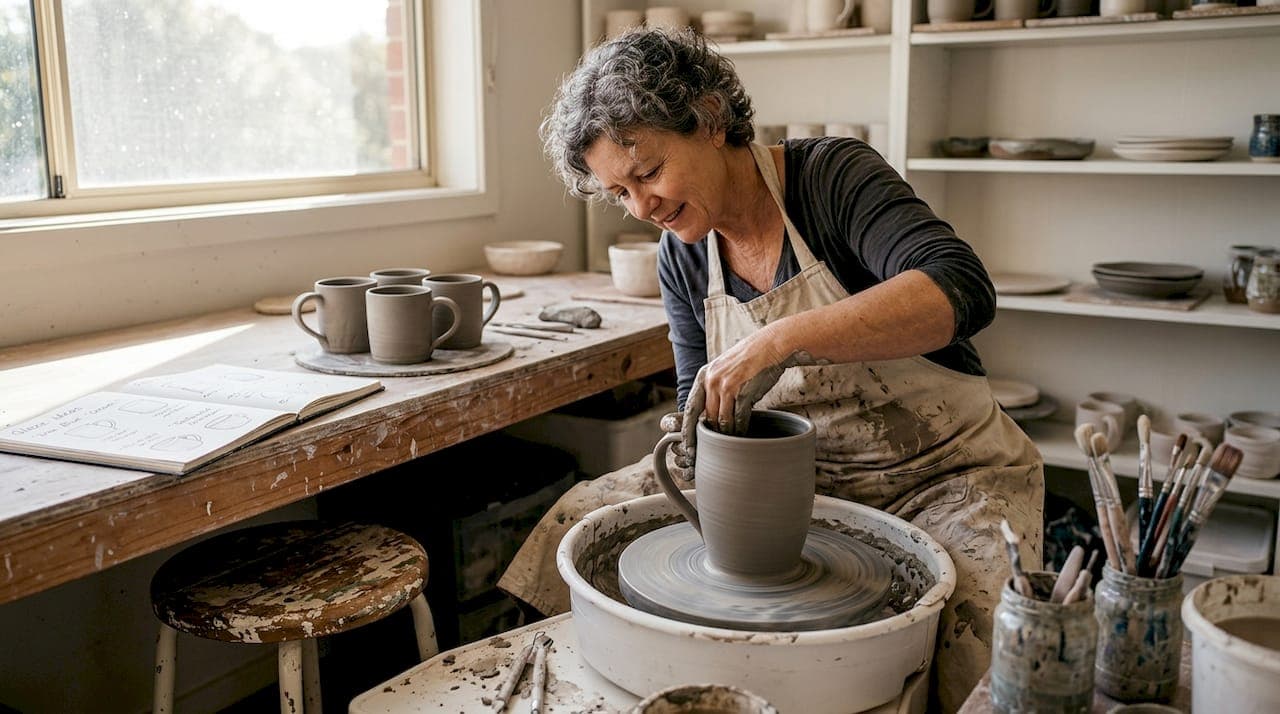
Beyond the clay, the process matters enormously. Artisanal ceramics are typically hand-thrown on a wheel or hand-built, meaning each piece carries the subtle imprint of the maker. Small-batch production allows for careful attention at every stage: shaping, trimming, drying, glazing, and firing. Glazing is where much of the visual magic happens. Natural ash glazes, reactive iron glazes, and kiln-change finishes produce colours and textures that are genuinely one-of-a-kind. You can see this quality in pieces like handmade flame mugs, where the kiln itself becomes a collaborator in the final look.
"The hand of the maker is always present in a well-crafted ceramic. You can feel the intention in every curve and every glaze decision." — ceramic artisan perspective
Firing temperature is another critical factor. High-fire stoneware becomes vitrified (meaning the clay particles fuse together), which makes it non-porous, food-safe, and far more durable than low-fire alternatives. The result is a piece that rings with a clear tone when tapped, feels smooth and consistent to the touch, and holds its colour over years of use.
Pro Tip: When assessing a ceramic piece, tap it gently with your fingernail. A clear, resonant ring suggests a well-fired, dense body. A dull thud can indicate air pockets or underfiring. Also look for a maker's stamp or signature on the base. Pieces like vintage ceramic mugs often carry these small marks of authenticity that distinguish handcrafted work from mass production.
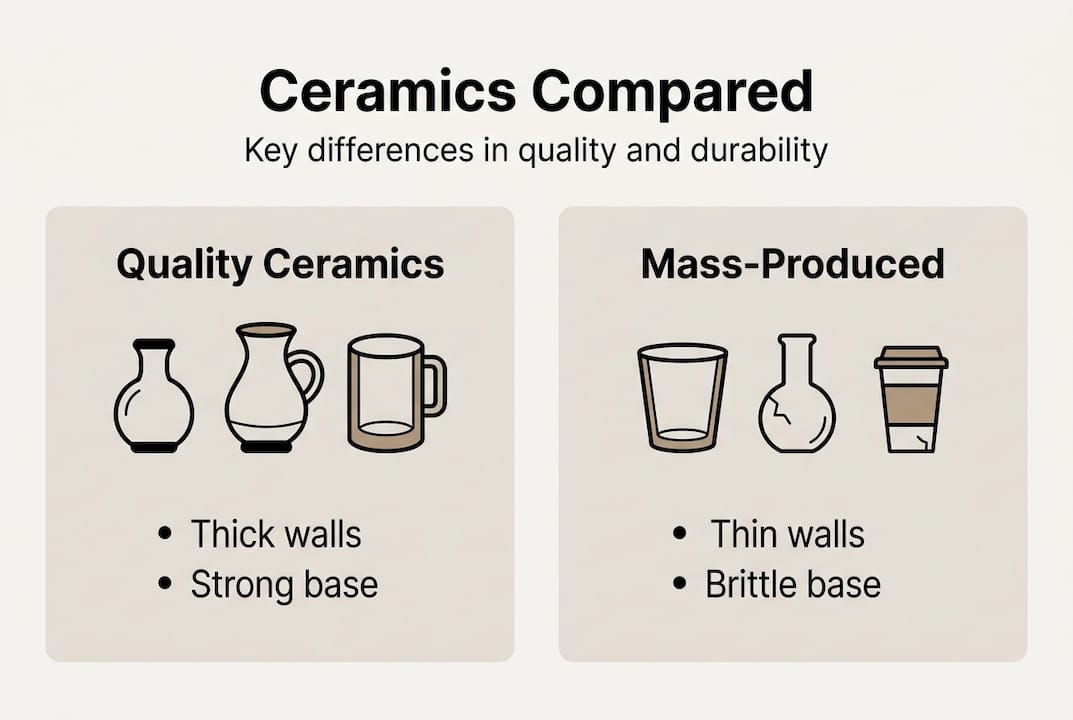
Signs of well-made ceramics include: even wall thickness, a stable flat base, a handle that feels secure and proportionate, and a glaze that sits consistently without pooling or bare patches.
Comparing quality ceramics with mass-produced options
Once you know what quality looks like, the difference between artisanal and factory-made ceramics becomes impossible to ignore. Mass-produced pieces are designed for speed and uniformity, which sounds appealing but comes at a cost.
Factory ceramics are typically cast in moulds and fired quickly at lower temperatures. The result is a lighter, thinner piece with a glaze that is applied by machine for consistency. On the surface, this looks fine. But over time, the glaze chips, the colour fades, and the piece loses whatever visual appeal it once had. There is also a tactile flatness to mass-produced ceramics. They feel anonymous in your hands.
Common issues with mass-produced ceramics include:
- Uneven rims that make drinking slightly awkward
- Glaze that crazes (develops fine cracks) after repeated dishwasher cycles
- Handles that feel thin or poorly attached
- Designs that are printed rather than fired into the glaze, meaning they wear off
- A lightweight feel that lacks the satisfying heft of quality stoneware
Here is a direct comparison to make the difference clear:
| Feature | Artisanal ceramics | Mass-produced ceramics |
|---|---|---|
| Material | High-fire stoneware or porcelain | Low-fire earthenware or mixed clay |
| Feel | Weighty, tactile, unique | Light, uniform, anonymous |
| Glaze | Reactive, layered, kiln-fired | Machine-applied, flat finish |
| Longevity | Decades with proper care | A few years before chipping or fading |
| Repairability | Kintsugi-worthy, ageable | Often discarded once damaged |
| Price over time | Higher upfront, lower long-term | Cheap upfront, replaced frequently |
Stoneware's superior chip resistance due to its density means a quality piece genuinely outlasts its cheaper counterpart many times over. When you factor in replacement costs and the environmental impact of disposable ceramics, the investment in quality makes clear sense.
Conscious consumers are increasingly choosing pieces like pink kiln glazed cups that carry a story, a finish that shifts in different light, and a presence that a mass-produced mug simply cannot replicate. Buying fewer, better things is not just an aesthetic choice. It is a values-driven one.
Why choosing quality ceramics enhances mindful living
There is a reason that slow mornings feel different when you are holding a beautiful cup. The weight of it, the warmth it holds, the way the glaze catches the light — these are not trivial details. They are the texture of a moment.
Mindful living is often discussed in abstract terms, but quality ceramics make it concrete. When you choose a piece with intention, you are also choosing to be present with it. The ritual of making tea or coffee becomes something worth pausing for, not just a caffeine transaction.
"Unique finishes in handmade ceramics offer an aesthetic and tactile experience that mass production simply cannot replicate."
Here are some simple ways to bring quality ceramics into your everyday routines:
- Designate a favourite cup for your morning ritual. Using the same beautiful piece each day builds a small but meaningful habit of appreciation.
- Set the table with intention, even for solo meals. A well-chosen ceramic bowl or plate changes the energy of eating alone.
- Gift ceramics with a story. A handmade piece given with context — the maker, the glaze technique, the origin — becomes a keepsake rather than just an object.
- Display pieces you love. Quality ceramics deserve to be seen. A shelf of blue kiln glazed latte cups or artisanal textured ceramics is a form of living décor.
- Slow down the wash-up. Hand-washing a quality piece is a moment of care, not a chore.
Pro Tip: When choosing ceramics for gifting or daily use, prioritise pieces with natural or reactive glazes. These finishes develop a subtle patina over time, meaning the piece actually becomes more beautiful with use — the opposite of what happens with mass-produced alternatives.
The act of gifting a quality ceramic carries its own meaning. Unlike a generic present, a handmade mug or cup communicates that you considered the recipient, their taste, their rituals. It is a gift that gets used every single day.

How to identify and care for quality ceramics
Knowing how to spot quality before you buy, and how to look after it once you do, makes all the difference in getting lasting value from your ceramics.
Well-made ceramics feature even walls, secure handles, and consistent glaze application. When you are assessing a piece, run your finger along the rim. It should feel smooth and even. Check the base for a maker's mark. Hold it and feel the weight — quality stoneware has a satisfying density. A piece like a beige ceramic latte cup should feel balanced and purposeful, not flimsy.
Red flags to watch for:
- Uneven or sharp rims
- Glaze that pools thickly at the base or has bare patches
- A handle that wobbles or feels thin where it meets the body
- Lightweight feel inconsistent with the stated material
- No maker's mark or production information
Once you have your quality pieces, caring for them properly extends their life significantly.
| Care task | Do | Don't |
|---|---|---|
| Washing | Hand-wash with mild detergent | Use abrasive scrubbers |
| Dishwasher | Check manufacturer's guidance | Assume all ceramics are dishwasher-safe |
| Stacking | Stack with felt pads between pieces | Stack directly without protection |
| Thermal shock | Let hot pieces cool before cold water | Pour cold water into a very hot cup |
| Storage | Store in a dry, ventilated space | Leave in damp conditions |
| Minor chips | Use food-safe epoxy for small repairs | Ignore sharp edges on rims |
For minor chips, food-safe epoxy or the Japanese art of kintsugi (repairing with gold) can restore a piece beautifully. Quality ceramics are worth repairing. Mass-produced ones rarely are.
A fresh perspective: Why the small details in ceramics matter most
Most buying advice focuses on price. Spend more, get better quality. That is true as far as it goes, but it misses the real point entirely.
The genuine value of a quality ceramic piece lives in the details that have nothing to do with cost. It is the slight variation in a glaze that makes you look twice every morning. It is the way a handle fits your grip so naturally that you stop noticing it, which is exactly when good design is working. It is the moment a guest picks up your mug and says, "Where did you get this?"
We have seen this with pieces like the English Kapok Mug, where a single design decision — a texture, a colour, a form — becomes the start of a conversation or a quiet source of daily pleasure.
Buying fewer, better things is not a trend. It is a return to something older and more sensible. When you invest in quality ceramics, you are also supporting the makers behind them, choosing longevity over landfill, and building a home environment that reflects genuine taste rather than convenience. That shift in thinking — from price-per-unit to value-per-use — changes how you approach not just ceramics, but gifting and homeware altogether.
Find your quality ceramics with Muggie
If this has sparked the urge to refresh your morning ritual or find a gift that genuinely means something, Muggie's collection is a natural place to start.
At Muggie, every piece is chosen for its craftsmanship, tactile appeal, and ability to make an everyday moment feel considered. Whether you are browsing artisanal tea cups for a slow afternoon ritual, exploring ceramic gift sets for someone who deserves something beautiful, or building your morning routine around pieces from the coffee mugs collection, you will find ceramics made to be used, loved, and kept. Quality is not a luxury here. It is the starting point.
Frequently asked questions
What makes ceramics 'high quality'?
High-quality ceramics feature even walls, secure handles, premium glazes, and kiln marks showing artisan craftsmanship. The feel, weight, and finish of a piece all signal the care that went into making it.
How long do quality ceramics last compared to standard ones?
Quality ceramics can last decades with proper care, far outlasting mass-produced pieces. Stoneware's chip resistance due to its density means it holds up to daily use without the fading or cracking common in factory-made alternatives.
Are handmade ceramics better for gifting?
Handmade ceramics feel unique and thoughtful, making them especially valued as gifts and keepsakes. The unique finishes of handmade pieces offer a tactile and aesthetic experience that a mass-produced item simply cannot match.
Recommended
- Why handmade ceramics matter in modern gift shops
- Ceramics for Slow Coffee and Tea
- How mug design shapes your sensory experience: 5 key facts
- Find the perfect ceramic mug: styles, craftsmanship & choices
- Role of Craftsmanship in Luxury Bags: Why Quality Matters - BVPRIVE
- Artisan-Crafted Jewelry: Authenticity & Ethics Guide - Australian Opal Direct