
TL;DR:
- Mug design influences taste perception, aroma, and temperature retention, enhancing mindful drinking.
- Shape, wall thickness, and rim width significantly affect sensory experience and flavor.
- Handcrafted mugs foster presence, uniqueness, and emotional connection, enriching daily rituals.
The mug sitting in your hands right now is doing more than holding your coffee. Its shape, weight, rim width, and colour are quietly influencing how your drink tastes, how long it stays warm, and how present you feel during those first quiet sips of the morning. Most of us choose mugs based on a quick visual impression, never pausing to consider that mug shape and geometry influence taste perception, aroma concentration, and temperature retention in measurable ways. This guide unpacks the science and artistry behind mug design, so you can make choices that genuinely elevate your daily ritual.
Table of Contents
- Why mug design matters for mindful living
- How shape, wall thickness, and rim affect your sensory experience
- Why mug colour changes flavour perception
- Handmade or factory-made? The emotional impact of mug design
- Our perspective: What most mug buyers overlook about design and experience
- Enhance your mindful ritual with artisan mugs
- Frequently asked questions
Key Takeaways
| Point | Details |
|---|---|
| Mug shape influences taste | The geometry and rim of your mug can shift how sweet or aromatic your drink feels. |
| Colour alters flavour perception | Mug colours create psychological effects that boost or soften tastes and enjoyment. |
| Handmade mugs foster mindfulness | Selecting and using unique, hand-thrown mugs enhances emotional connection and ritual. |
| Design choices impact gifting | A thoughtfully designed mug adds meaning and sensory pleasure to any gift-giving occasion. |
Why mug design matters for mindful living
Mindful living is not a grand gesture. It lives in the small, repeated moments: the first cup of tea before the house wakes up, the afternoon coffee you actually sit down to enjoy. These rituals are most powerful when they engage your senses fully, and the vessel you use plays a larger role than most people realise.
The physical qualities of a mug, its weight in your palm, the curve of its handle, the way the rim meets your lip, all send signals to your brain before you even take a sip. A mug that feels substantial and well-balanced encourages you to slow down. One that feels flimsy or awkward can subtly pull you out of the moment.
Design details worth paying attention to include:
- Rim width: Wider rims release more aroma, while narrower rims concentrate it toward your nose.
- Handle comfort: A handle that fits your grip reduces tension and keeps your focus on the drink, not the vessel.
- Wall curvature: Straight-sided mugs deliver liquid differently to the tongue than rounded ones, affecting perceived flavour.
- Overall weight: Heavier ceramics tend to feel more considered and premium, nudging you toward a slower pace.
"Your mug's geometry can change the taste of your coffee." Research confirms that mug shape influences taste and aroma concentration, meaning the vessel is never just a container.
For anyone drawn to ceramics for slow coffee rituals, this is genuinely good news. It means that investing in a thoughtfully designed mug is not indulgent. It is a practical, evidence-backed way to get more from your daily practice. When you choose ceramic coffee mugs with intention, you are designing your own sensory experience from the ground up.
The shape, feel, and weight of a mug encourage present-moment awareness in a way that a disposable cup simply cannot replicate. That tactile engagement is the foundation of a meaningful ritual.
How shape, wall thickness, and rim affect your sensory experience
Let's get specific about geometry. The science here is more interesting than you might expect, and it has real implications for which mug you reach for each morning.
Rounder mugs enhance perceived sweetness, while thicker walls keep drinks warm longer, and the optimal rim width sits between 3 and 5mm for the best mouthfeel and aroma delivery. These are not minor differences. They can shift your entire perception of a brew.
| Design element | Sensory impact |
|---|---|
| Round mug shape | Enhances perceived sweetness |
| Straight or angular shape | Can increase perceived bitterness |
| Thicker walls (4mm+) | Better heat retention, warmer sip |
| Thinner walls | Faster cooling, sharper initial flavour |
| Rim width 3 to 5mm | Optimal mouthfeel and aroma delivery |
| Wide flared rim | Releases more aroma before sipping |
Wall thickness matters more than most people realise. Thicker ceramic walls act as insulation, keeping your drink at an enjoyable temperature for longer. This is especially relevant for ceramic tea cups, where temperature is central to the flavour profile of a delicate green or white tea.
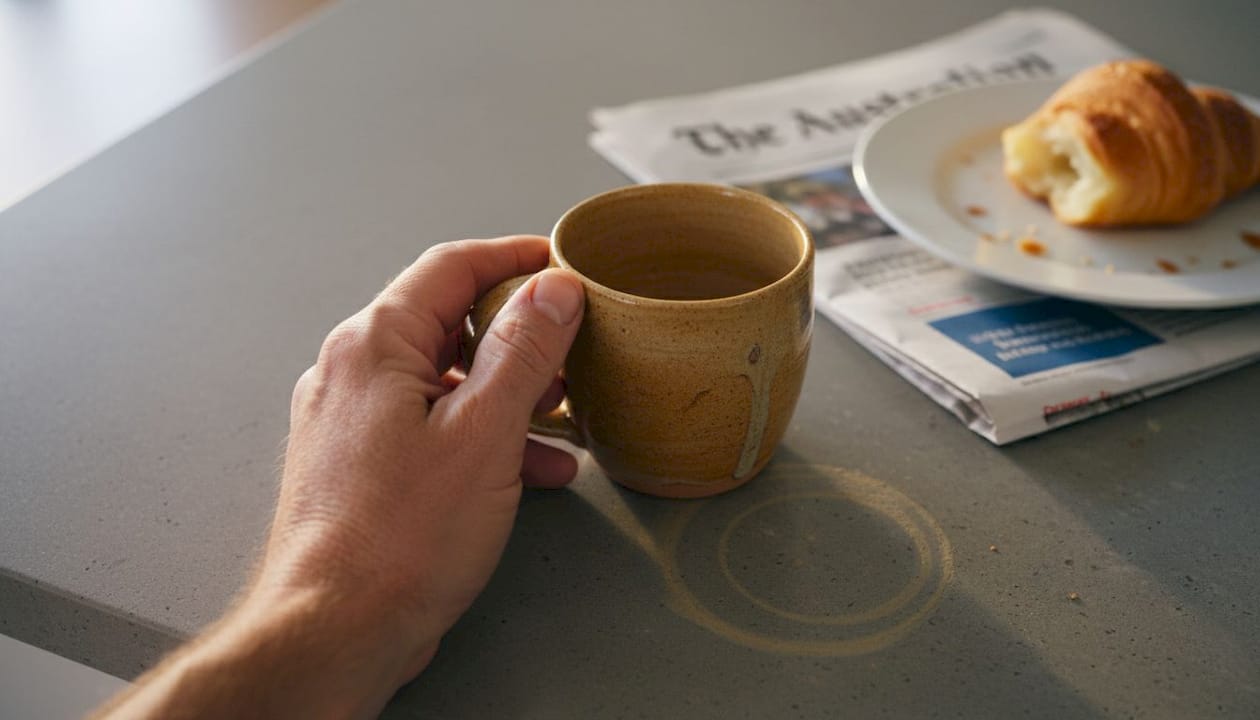
The rim is where liquid first contacts your lip, and a smooth, moderate-width rim of around 3 to 5mm creates a gentle, even flow that lets flavour spread across the palate. A rim that is too thin can feel sharp and rushed. Too wide, and the drink hits the front of your mouth before you are ready.
Pro Tip: When choosing a new mug, run your finger along the rim before you buy. If it feels smooth and comfortable at rest, it will feel even better mid-ritual.
These details are not accidental in well-crafted ceramics. Skilled makers consider all of them during the throwing and trimming process, which is precisely why a handmade mug often feels so different from a mass-produced one, even when they look similar at a glance.
Why mug colour changes flavour perception
Colour psychology is well-established in food and beverage research, and mugs are no exception. The colour of your vessel creates a cross-modal effect, meaning what your eyes see influences what your taste buds register. It sounds counterintuitive, but the evidence is consistent.
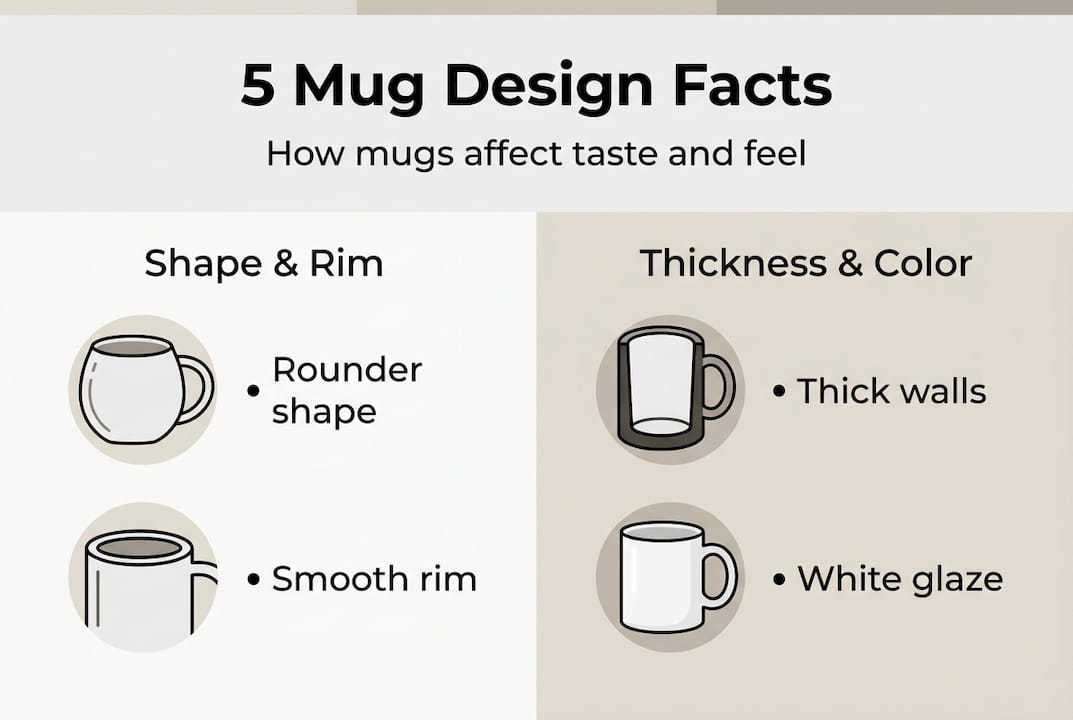
White mugs are rated as providing higher flavour intensity than transparent mugs, which means the same coffee can taste stronger or more complex simply because of the vessel's colour.
Here is how common colour choices tend to shape sensory expectations:
- White: Amplifies perceived flavour intensity and brightness. Coffee tastes bolder, tea tastes cleaner.
- Cream or off-white: Softens the experience slightly, lending a warmer, more comforting tone.
- Dark tones (navy, charcoal, black): Can increase perceived bitterness, making espresso feel more intense.
- Earthy greens and terracottas: Create a grounding, natural association that complements herbal teas beautifully.
- Patterned surfaces: Introduce visual complexity that can distract from the drink itself, sometimes reducing perceived intensity.
| Mug type | Perceived flavour impact |
|---|---|
| White ceramic | Higher intensity, sharper flavour |
| Transparent glass | Lower intensity, more neutral |
| Patterned ceramic | Variable, often reduced focus on flavour |
For gifting, this knowledge is genuinely useful. A thoughtfully coloured mug is not just a pretty object. It is a considered choice that shapes how the recipient experiences their daily drink. When you give someone a ceramic gift set in a colour that suits their ritual, you are offering something that works on a sensory level, not just a visual one.
Colour is one of the most overlooked levers in mug selection, and understanding it gives you a real advantage when building a collection or choosing a gift.
Handmade or factory-made? The emotional impact of mug design
There is a reason a handmade mug feels different the moment you pick it up. It is not nostalgia or imagination. It is a genuine difference in the emotional and sensory experience the object creates.
Here are three ways handmade mugs shift the emotional rhythm of your daily routine:
- Uniqueness fosters presence. No two handmade mugs are identical. That slight variation in glaze or form is a quiet reminder that this object was made by a person, for a purpose. It invites you to notice, rather than rush.
- Tactile irregularity slows you down. The gentle texture of a thrown ceramic surface gives your hands something to engage with, anchoring you in the physical moment rather than letting your mind drift.
- Perceived value elevates the ritual. When an object feels considered and special, you treat the time around it differently. You are less likely to scroll your phone when your mug feels worth savouring.
Handmade mugs foster uniqueness and mindfulness, while factory mugs prioritise efficiency. Ceramics empirically enhance the drinking experience, though too many competing design cues can become overwhelming rather than grounding.
That last point is worth sitting with. There is such a thing as too much sensory input. A mug covered in bold patterns, unusual textures, and a dramatic shape can create what researchers call hedonic overload, where competing stimuli cancel each other out and the experience feels cluttered rather than calm.
Pro Tip: When gifting, resist the urge to choose the most visually striking option. A floral ceramic mug with a cohesive, considered aesthetic will create a far more lasting impression than something chosen purely for novelty.
The best mug for mindful living is one where every design decision serves the experience, not just the shelf appeal.
Our perspective: What most mug buyers overlook about design and experience
Most people approach mug buying the same way they approach buying a decorative cushion: they look for something that matches the kitchen or catches their eye in a shop. The result is a cupboard full of mugs that are used interchangeably, none of them chosen with any real intention.
What gets lost in that approach is the compounding value of a single, well-chosen mug. When you use the same beautiful, well-weighted ceramic every morning, it becomes an anchor. A cue that tells your nervous system: this is the slow part of the day. That is not a small thing.
We have found that people who explore ceramic mugs with genuine curiosity, paying attention to how a piece feels rather than just how it looks, almost always end up with fewer mugs and a richer daily experience. Less accumulation, more intention.
Pro Tip: Before committing to a new mug, hold it with both hands, close your eyes, and notice how it feels. Does it feel grounded? Comfortable? That physical response is data worth trusting.
The hidden pay-off of owning fewer, better mugs is that each one carries more meaning. And meaning, it turns out, is what makes a morning ritual actually restorative.
Enhance your mindful ritual with artisan mugs
If this article has shifted the way you think about your morning vessel, you are already halfway to a richer ritual. The next step is finding pieces that embody these principles in their design.
At Muggie, every piece in our collection is hand-thrown with sensory experience and mindful gifting in mind. From the delicate Ru tea set petal to the beautifully detailed pedestal floral tea cup, each piece is made to feel as good as it looks. If you are searching for a gift that genuinely resonates, our giftable ceramic sets are curated to offer a complete sensory experience in a single, thoughtful package.
Frequently asked questions
How does mug shape affect taste?
Rounder mugs enhance perceived sweetness while different shapes influence aroma delivery and mouthfeel through changes in geometry and rim width. Even subtle curves can shift how flavour registers on the palate.
Do mug colours really make drinks taste different?
Yes. White mugs rate higher for flavour intensity than transparent mugs, and darker or patterned vessels can shift the perceived bitterness or sweetness of the same drink.
What is the ideal mug for mindful sipping?
A ceramic mug with a comfortable handle, slightly thicker walls, and a smooth rim of 3 to 5mm is optimal for both heat retention and sensory enjoyment during a slow, intentional ritual.
Are handmade mugs better for gifting?
Handmade uniqueness fosters mindfulness and emotional connection, making a handcrafted mug a far more meaningful gift than a factory-produced equivalent. The slight variations in form and glaze are features, not flaws.