
TL;DR:
- Choosing the right ceramic mug depends on heat retention, handle comfort, and aesthetic preference.
- Handmade Australian mugs with reactive glazes emphasize uniqueness, craftsmanship, and natural variation.
- For daily use, stoneware offers excellent heat retention and durability, ideal for slow morning routines.
Picking a ceramic mug sounds simple until you're standing in front of a shelf of options, or scrolling through dozens of styles online, wondering which one will actually feel right in your hands at 7am. Australians have always valued mugs that do more than hold a drink. We want something that feels good, looks considered, and fits the rhythm of our mornings. But with so many materials, shapes, glazes, and makers to choose from, the decision gets genuinely confusing. This guide cuts through the noise and gives you a clear framework for finding a mug that matches both your aesthetic and your everyday life.
Table of Contents
- How to evaluate ceramic mugs: key features for Aussie daily use
- Exploring classic and modern ceramic mug types
- The role of design and craftsmanship in choosing your mug
- Side-by-side comparison: which ceramic mug type suits you?
- Choosing the right mug for mindful moments and gifting
- Our perspective: why the best ceramic mugs blend tradition and modern meaning
- Find your next favourite ceramic mug with Muggie
- Frequently asked questions
Key Takeaways
| Point | Details |
|---|---|
| Evaluate key features | Consider insulation, handle design, and safety when choosing a ceramic mug for daily comfort. |
| Know your types | Stoneware, porcelain, and earthenware all offer different looks and feel for various daily or gifting needs. |
| Design matters | Handmade mugs with balanced weight and fine lips enhance both ritual and taste experience. |
| Comparison helps | A side-by-side look at mug types clarifies the best fit for your lifestyle and preferences. |
| Support local artisans | Choosing Australian-made mugs promotes sustainability, unique design, and mindful gifting. |
How to evaluate ceramic mugs: key features for Aussie daily use
Now that you know why selecting the right mug matters, let's break down the qualities you should focus on.
The first thing worth considering is how well a mug holds heat. Stoneware retains heat longer, ergonomic handles enhance comfort, and high-fired ceramics are more durable. Thick walls and a solid base make a real difference when you're the type to wander off mid-brew and come back ten minutes later. Porcelain, while beautiful, tends to cool faster due to its thinner walls.
Handle design is often overlooked, but it matters more than people expect. A well-angled handle keeps your fingers away from the hot body of the mug. Square, dimpled, or thumb-rest handles offer different grip styles depending on your hand size and preference. If you're buying for someone else, a generous loop handle is usually the safest choice.
Here are the key features to assess before buying:
- Capacity: 300ml to 400ml suits most coffee drinkers; 200ml works well for espresso or tea
- Wall thickness: Thicker walls mean better insulation and a more tactile feel
- Firing temperature: High-fired ceramics are denser, less porous, and more chip-resistant
- Safety ratings: Look for food-safe glazes, dishwasher-safe finishes, and microwave-safe labelling
- Rim quality: A smooth, even lip prevents drips and makes sipping more comfortable
- Sourcing: Local Australian artisans offer handmade quality and lower environmental impact than mass-produced imports
Pro Tip: Run your finger around the rim before buying. Any roughness or unevenness will irritate your lip over time, no matter how beautiful the glaze looks.
For a deeper look at what makes a mug worth keeping, choosing the perfect ceramic mug is a useful starting point before you commit to a style.
Exploring classic and modern ceramic mug types
With evaluation criteria clear, it's easier to understand the range of mug types available to Australians.
Capacities of 200 to 450ml are common for daily use, and stoneware and porcelain remain the most popular choices across both cafés and home kitchens. But the differences between mug types go well beyond size.
Here's a quick breakdown of the main types you'll encounter:
- Stoneware: Dense, rustic, and excellent at retaining heat. The go-to for long morning coffees and slow rituals
- Porcelain: Lighter and more refined. Ideal for tea, delicate brews, or anyone who prefers an elegant aesthetic
- Earthenware: Has a warm, earthy finish and a more casual feel. More porous than stoneware, so it needs careful sealing and care
- Ceramic travel mugs: Artisanal versions exist, but they're generally less leakproof than stainless steel alternatives
- Handmade mugs: Each piece is unique, with natural variations in glaze and form. Highly valued for gifting and personal collections
To help you compare at a glance:
| Mug type | Heat retention | Weight | Best for |
|---|---|---|---|
| Stoneware | Excellent | Medium to heavy | Daily coffee, slow mornings |
| Porcelain | Moderate | Light | Tea, refined presentation |
| Earthenware | Moderate | Medium | Casual use, rustic styling |
| Handmade | Varies | Varies | Gifting, personal rituals |
If you're exploring ceramic coffee mug styles, you'll find that handmade options often carry a visual personality that mass-produced mugs simply can't replicate. For something a little more sculptural, elegant goblet mugs offer a distinctive silhouette that stands out on any table.
The role of design and craftsmanship in choosing your mug
Knowing the types, the next step is understanding why artistry and detail can elevate a simple mug to something special.
Handmade mugs feature authentic variations and reactive glazes; thin lips enhance aroma, and balanced weight prevents top-heaviness during use. These aren't just aesthetic details. They're functional choices made by someone who has thought carefully about how a mug feels in use.
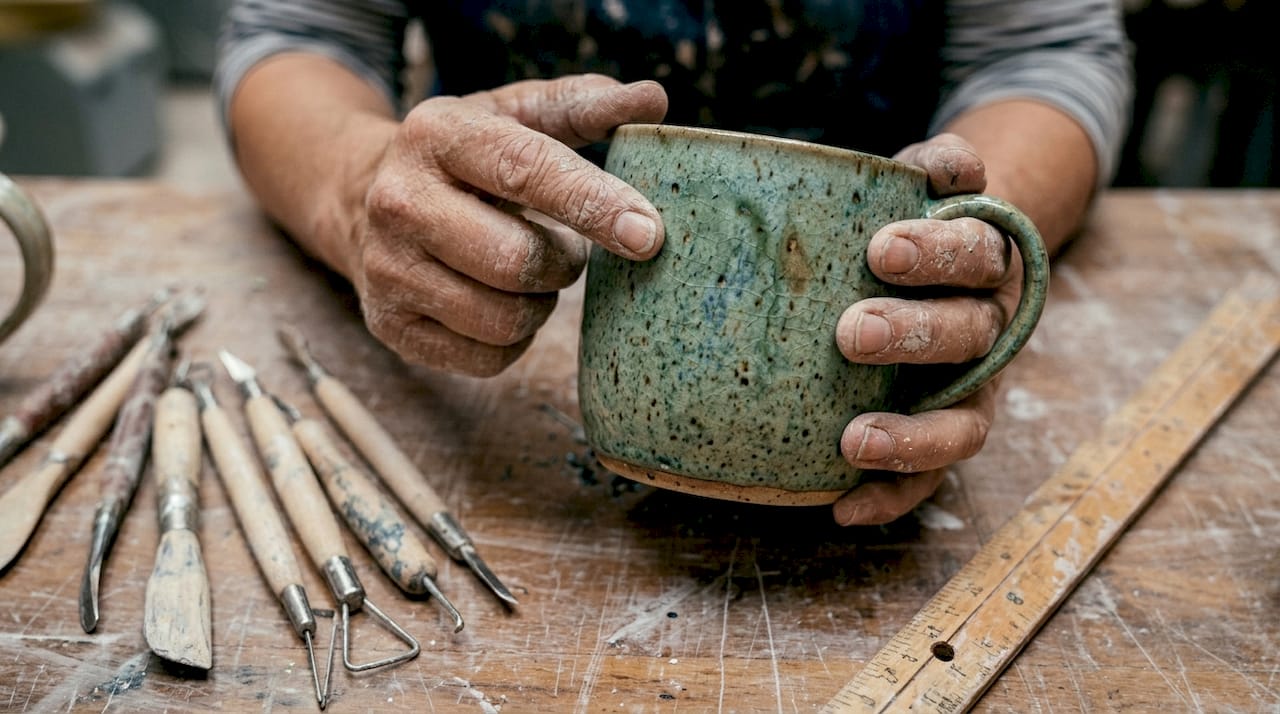
Australia has a genuinely rich ceramic arts scene. From studio potters in regional Victoria to urban makers in inner-city Sydney and Melbourne, local artisans bring a distinct sensibility to their work. Many draw on the Australian landscape for colour inspiration, using ochres, sea greens, and dusty blues that feel native to this place.
Glaze choices tell their own story:
- Reactive glazes shift and pool unpredictably during firing, meaning no two mugs look identical
- Matte glazes offer a soft, modern look and a pleasant tactile surface
- Gloss glazes are easy to clean and give a classic, polished finish
- Unglazed exteriors provide a raw, earthy texture that feels grounded and natural
"The best mugs are the ones that make you want to slow down and actually enjoy what's in them."
Pro Tip: When assessing a handmade mug, hold it at eye level and look at the glaze pooling near the base. Uneven pooling is a sign of genuine hand-throwing, not a flaw.
Prioritise high-fired stoneware from local artisans for sustainable, unique gifts that carry real meaning. If you want to see what reactive glazing looks like in practice, the handmade kiln change mugs are a striking example of how fire transforms a glaze into something unexpected.
Side-by-side comparison: which ceramic mug type suits you?
Let's bring it all together with a direct comparison to help your final decision.
Choosing between mug types often comes down to three things: how you use your mug, how you care for it, and whether it's for yourself or someone else.
| Feature | Stoneware | Porcelain | Earthenware | Handmade |
|---|---|---|---|---|
| Heat retention | Excellent | Moderate | Moderate | Varies |
| Dishwasher safe | Usually yes | Usually yes | Check label | Check with maker |
| Microwave safe | Usually yes | Usually yes | Often yes | Check with maker |
| Stain resistance | High | High | Lower | Depends on glaze |
| Gifting appeal | High | High | Moderate | Very high |
| Price range | Mid | Mid to high | Low to mid | Mid to high |
Unglazed vitrified exteriors are stain-resistant but best hand-washed, and ceramic travel mugs are less leakproof than steel alternatives. Keep this in mind if you're buying for someone who commutes.
A few practical points worth noting:
- Always check the base of the mug for a food-safe or dishwasher-safe stamp
- Avoid mugs with metallic glaze accents if you plan to microwave them regularly
- Stoneware and porcelain are your safest bets for everyday use and easy care
- For gifting, handmade mugs with unique glaze effects create a more memorable impression
For something with real visual impact, the kiln glazed matcha mugs and blue kiln glazed mugs show how glaze variation can turn a functional object into something genuinely beautiful.
Choosing the right mug for mindful moments and gifting
Armed with the pros and cons, here are concrete tips for matching your mug choice with your needs or a memorable gift.
For your own daily rituals, think about the specific moment you're buying for. A thick-walled stoneware mug suits a slow morning coffee at home. A lighter porcelain cup works beautifully for afternoon tea. If you work from home, a 400ml stoneware mug that holds heat while you focus is a practical and satisfying choice.
Prioritising local artisans encourages sustainable, unique production and supports makers who genuinely care about their craft. That matters both ethically and aesthetically.
Here's how to match mug type to occasion:
- Morning coffee ritual: Stoneware, 350ml or larger, with a comfortable handle and good weight
- Afternoon tea: Porcelain, 200 to 250ml, with a refined lip and elegant form
- Home office companion: Stoneware with a wide base for stability and excellent heat retention
- Outdoor use: Earthenware or a robust handmade piece that feels casual and relaxed
- Gifting: Handmade with reactive glaze, paired with a small bag of specialty coffee or loose-leaf tea
Pro Tip: When putting together a gift, pair a handmade mug with a small tin of quality tea or coffee and a handwritten note. It transforms a single object into a considered, personal experience.
For ready-made options that are already beautifully presented, ceramic gift sets take the guesswork out of gifting without sacrificing any of the thoughtfulness.
Our perspective: why the best ceramic mugs blend tradition and modern meaning
Beyond practical advice, here's what truly sets a special ceramic mug apart.
We believe the most meaningful mugs are the ones that carry a sense of place and intention. A mug thrown by an Australian maker, fired in a local kiln, and glazed with materials that respond unpredictably to heat is not just a vessel. It's a small piece of someone's creative life.
There's a tendency in homeware to chase novelty, to buy what looks good in a flat-lay photo rather than what feels right in your hands at 6am. But the mugs that stick around, the ones that become part of your daily identity, are almost always the ones made with genuine care.
Australian ceramic culture has always leaned toward the tactile and the honest. We value things that show their making, that wear their imperfections openly. A reactive glaze that pools differently on every piece isn't a quality control issue. It's the whole point.
For us, that's what mindful consumption actually looks like in practice. Not buying less for its own sake, but choosing objects that genuinely earn a place in your life. The artisan forest green mugs are a good example of what that balance looks like when it's done well.
Find your next favourite ceramic mug with Muggie
Ready to find your next artisan mug? Here's where you can start.
At Muggie, every piece in the collection is chosen for its craftsmanship, tactile quality, and the way it fits into a slower, more intentional kind of morning. Whether you're looking for something for yourself or searching for a gift that genuinely stands out, the range covers everything from everyday favourites to special occasion pieces.
You can browse Australian handmade mugs to find your next everyday companion, or explore gift-ready ceramic sets for a present that feels considered and personal. If you want something truly one-of-a-kind, the unique flame mug is a standout piece that captures exactly what kiln-change glazing can do.
Frequently asked questions
Which ceramic mug type is best for keeping drinks hot?
Stoneware retains heat longer than porcelain due to its dense, thick-walled structure, making it the best choice for anyone who likes their coffee to stay warm through a slow morning.
Are handmade mugs more durable than mass-produced ones?
High-fired handmade mugs are dishwasher and microwave safe and hold up well to daily use, as long as there are no cracks or uneven spots in the clay body.
Why are unglazed ceramic mugs sometimes preferred?
Vitrified unglazed exteriors resist staining and offer a raw, earthy feel that many people find more satisfying to hold, though hand-washing is recommended to preserve the surface.
How can I tell if a ceramic mug is microwave safe?
Look for a high-fired label on the base or ask the maker directly; most stoneware and porcelain mugs are microwave safe if high-fired, unless they feature metallic glaze accents.
What is a reactive glaze on a ceramic mug?
Reactive glazes are unpredictable during firing, creating unique colour shifts and pooling patterns that make every mug distinct, which is exactly why they're so valued in handmade ceramics.