
TL;DR:
- The design and material of a coffee cup significantly influence flavor perception and sensory experience.
- Traditional vessels like Ethiopian Jebena and Japanese chawan embody cultural rituals of mindfulness and belonging.
- Intentionally choosing artisanal ceramics enhances daily rituals, connecting you with presence and sensory pleasure.
Your coffee cup is not just a vessel. It is a sensory instrument, a cultural artefact, and a quiet anchor for the most important moments of your day. Most people spend considerable time choosing their beans, dialling in their grind, and perfecting their brew ratio, yet they reach for whatever mug is closest on the shelf. This guide is about changing that instinct. We will explore the science behind vessel design, the beauty of global coffee traditions, and how selecting the right ceramic piece can genuinely transform your daily ritual into something you look forward to with your whole self.
Table of Contents
- Why design matters in daily coffee rituals
- How cup shape and material influence your coffee experience
- Ceramics and culture: Rituals from around the world
- Elevating your own ritual: Choosing artisanal ceramics
- Modern perspectives: Automation, artistry, and the future of coffee rituals
- The overlooked power of mindful tableware design
- Discover unique ceramics to elevate your ritual
- Frequently asked questions
Key Takeaways
| Point | Details |
|---|---|
| Design shapes flavour | Cup shape and material subtly alter how your coffee tastes, smells, and feels. |
| Ceramics enhance rituals | High-quality ceramics support mindfulness and elevate both routine and table presentation. |
| Culture guides tradition | Ceremonial coffee vessels connect you to community, artistry, and deep-rooted ritual. |
| Choose with intention | Selecting the right tableware lets you craft daily moments of beauty and presence. |
Why design matters in daily coffee rituals
There is a moment, just before the first sip, when everything pauses. The warmth of a cup in your hands, the rising steam, the quiet of the morning. That moment is a ritual, and the vessel you hold shapes it entirely. Design is not decoration. It is the language through which your cup communicates with your senses before coffee ever reaches your lips.
"A cup is not merely a container. It is the final stage of the brewing process, where all previous decisions either succeed or are undone."
When you pick up a well-made ceramic mug, you feel its weight, its texture, the way the rim meets your mouth. These are not accidental qualities. Cup shape, rim thickness, and material all affect the sensory perception of flavour, aroma, sweetness, and acidity. A thin rim delivers coffee differently than a thick one. A bowl-shaped cup holds heat differently than a tall, straight-walled vessel. Each variable nudges your experience in a specific direction.
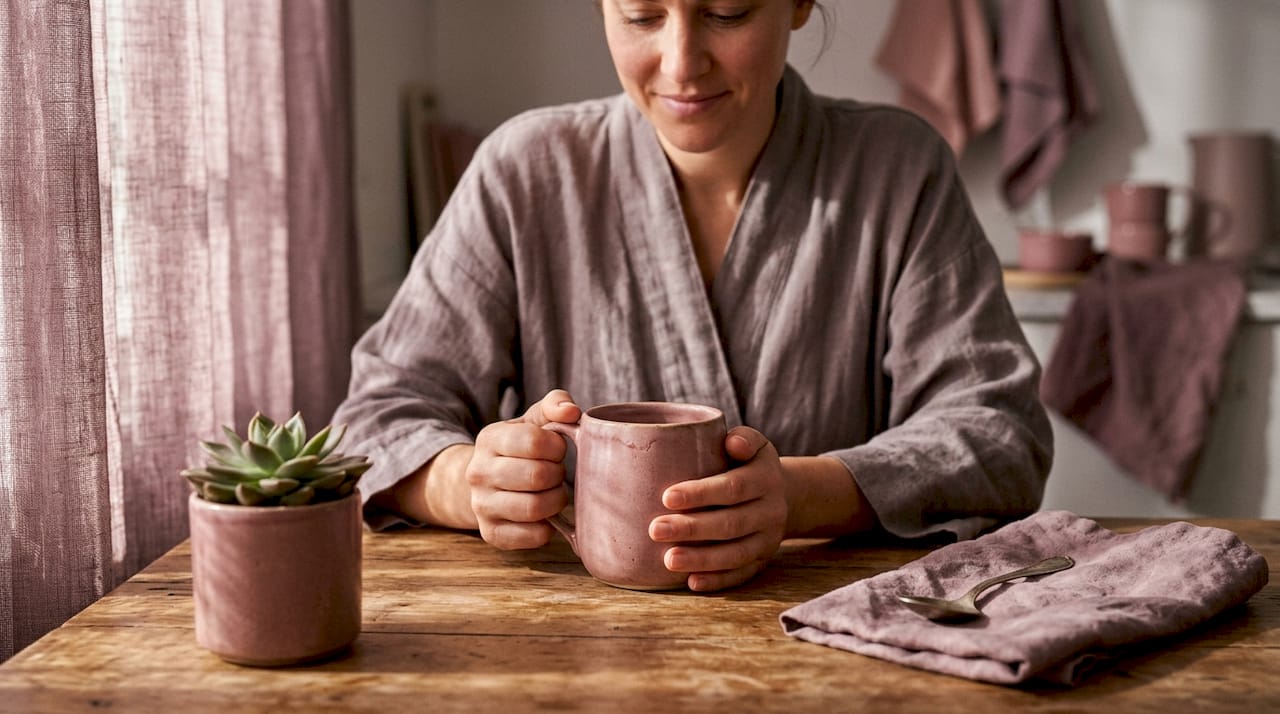
Design also sets the psychological tone for your ritual. Holding something beautiful and intentional signals to your brain that this moment matters. It slows you down. It invites presence. In a world built for speed, a thoughtfully chosen cup is a quiet act of resistance.
Key design features to pay attention to:
- Shape: Tulip, bowl, straight-walled, and handled cups each guide aroma and liquid flow differently.
- Rim thickness: Thin rims feel refined and deliver coffee cleanly; thicker rims feel grounded and tactile.
- Material: Ceramic retains heat well and develops a relationship with its user over time.
- Glaze finish: Matte glazes feel different against the lip than glossy ones, influencing tactile enjoyment.
Explore the full range of shapes and sizes available in our ceramic mugs collection if you want to see how these principles translate into real, handcrafted pieces.
How cup shape and material influence your coffee experience
Now that you understand why design matters, let us look at the evidence. The relationship between vessel design and taste perception is well established in sensory research, and the findings are genuinely surprising.
Tulip-shaped cups, those with a narrow middle and a slightly flared top, increase aroma perception, while cups with wider mouths tend to enhance the perception of sweetness and acidity. This happens because aroma compounds concentrate or disperse depending on the internal geometry of the cup. A narrower opening funnels volatile aromatic molecules toward your nose, intensifying the fragrance. A wider opening allows those molecules to spread, which changes the aromatic balance you perceive before and during each sip.
| Cup shape | Aroma effect | Flavour emphasis | Best suited for |
|---|---|---|---|
| Tulip | Concentrated | Floral, complex notes | Specialty espresso, pour-over |
| Wide bowl | Diffused | Sweetness, brightness | Flat white, latte |
| Straight-walled | Balanced | Clean, even profile | Drip coffee, long blacks |
| Handled tall mug | Moderate | Mellow, rounded | Milky coffee, everyday use |
Rim thickness is equally important. A fine, thin rim allows coffee to flow smoothly onto the tongue without interference. A thicker rim slows that flow slightly and spreads the liquid across a broader area of the palate. Neither is objectively better. They simply create different experiences.
Material matters too. Ceramic absorbs and holds heat in a way that glass and stainless steel simply do not replicate. A well-fired ceramic piece keeps your coffee at a comfortable drinking temperature for longer, which means you are not rushing through your cup before it cools. The blue ceramic latte cup from Muggie is a beautiful example of how kiln-glazed ceramics combine heat retention with visual artistry.

Pro Tip: For a single-origin pour-over or a delicate Ethiopian natural, choose a tulip-shaped or narrower cup to capture floral and fruity aromas. For a creamy flat white or oat milk latte, a wide-bowl style cup will let those sweeter notes shine.
Ceramics and culture: Rituals from around the world
Understanding design in isolation is interesting. Understanding it within the context of living traditions is transformative. Cultures around the world have spent centuries refining the relationship between vessel and ritual, and their wisdom is embedded in every curve and clay composition.
Take the Ethiopian coffee ceremony. Clay and porcelain vessels such as the Jebena (a clay pot) and the Sini (small, handle-free cups) are integral to this ritual, which is not a quick morning pick-me-up but a multi-hour communal experience. Coffee is roasted, brewed, and served three times across an extended gathering. Each round has its own name and social meaning. The vessel is inseparable from the experience.
"In Ethiopia, refusing the third cup of coffee is considered impolite. The ceremony is not about the coffee alone. It is about presence, time, and belonging."
In Japan, the tea ceremony extends similar principles to matcha preparation. The chawan (tea bowl) is selected with deliberate care, often chosen for a specific season, occasion, or guest. Its rough, earthy texture is considered an expression of wabi-sabi (the beauty of imperfection), and handling the bowl with two hands is a gesture of respect and mindfulness.
| Cultural tradition | Vessel | Material | Key design feature | Value expressed |
|---|---|---|---|---|
| Ethiopian ceremony | Jebena, Sini | Clay, porcelain | Handle-free, small | Community, hospitality |
| Japanese tea ceremony | Chawan | Stoneware | Rough, asymmetric | Mindfulness, wabi-sabi |
| Chinese Gongfu cha | Gaiwan | Porcelain | Lidded, no handle | Precision, artistry |
| Turkish coffee ritual | Fincan | Porcelain | Tiny, tulip-shaped | Respect, tradition |
The steps behind a traditional coffee or tea ceremony typically follow a similar logic:
- Prepare the space with intention, cleaning and arranging vessels before beginning.
- Heat water to the correct temperature for the specific style of brew.
- Warm the vessel by rinsing it with hot water before adding the drink.
- Brew slowly, attending to each stage rather than rushing toward the outcome.
- Serve with care, holding the cup with both hands as a sign of respect.
- Pause before drinking. Observe the colour, aroma, and warmth before the first sip.
These traditions are not quaint relics. They are practical frameworks for mindful consumption, each step anchored by the design of the vessel itself. Browse our range of ceramic tea cup styles if you feel drawn to incorporate this kind of intentional approach into your own morning practice.
Elevating your own ritual: Choosing artisanal ceramics
Knowing the science and the history is one thing. Applying it to your actual morning routine is where the real shift happens. Choosing artisanal ceramics is not about spending more money for the sake of it. It is about investing in an object that rewards daily attention.
High-quality ceramics elevate table presentation and the ritual experience in a way that mass-produced, uniform pieces simply cannot. When every cup looks identical and feels lightweight in the hand, there is nothing to engage with. Artisanal pieces carry variation, intention, and the trace of a human hand in their making.
Here is how to identify genuine quality when you are choosing a ceramic cup:
- Weight and balance: A well-made ceramic piece feels substantial but not heavy. It sits comfortably in the hand without feeling clunky.
- Glaze consistency: Look for even coverage with no dry or flaking patches. Interesting surface variation in kiln-fired glazes is a sign of character, not defect.
- Rim finish: Run your finger around the rim. It should feel smooth and consistent. A rough or sharp rim will interrupt every sip.
- Base stability: A flat, steady base means the cup sits cleanly on a table without rocking, which matters more than you realise during a slow morning.
- Fired clay density: Tap the side gently. A clear, resonant ring indicates a well-fired piece with good density and heat retention.
Questions to ask yourself before choosing a cup:
- What do I brew most often, and what shape best supports that style?
- Do I prefer the tactile feeling of a matte or glossy glaze against my lips?
- Will this cup make me happy to look at on the bench each morning?
- Is it food-safe and easy to care for in my daily routine?
The beige kiln glazed cup is a wonderful example of a piece that answers all of these questions with quiet confidence. Its warm, neutral tone suits any setting, and the kiln glaze gives it an organic, one-of-a-kind quality.
Pro Tip: Keep your favourite ceramic cups on open shelving rather than tucked in a cupboard. Seeing them each morning reinforces the ritual and reminds you that your coffee moment is worth preparing for.
If you are shopping for someone else, giftable ceramic sets take the guesswork out of choosing, pairing complementary pieces in a way that makes the ritual feel complete from day one.
Modern perspectives: Automation, artistry, and the future of coffee rituals
As you weigh your next ceramic purchase, it is worth pausing to consider how intentional design fits within a modern, time-pressured life. Not every morning allows for a leisurely six-step ritual. And that is completely fine.
Automated precision tools like the xBloom allow pour-over enthusiasts to maintain ritual precision without the manual pour, offering consistency when attention is elsewhere. Technology is not the enemy of mindful coffee practice. It can be a partner in it.
The key is knowing what role each element plays in your routine:
- Ceramics serve presence. They anchor you in the tactile, sensory experience of now.
- Precision tools serve consistency. They reduce variables and protect quality when you are distracted or rushed.
- Ritual serves intention. Whether you brew manually or automatically, the act of choosing a beautiful cup signals that this moment is yours.
The pink ceramic latte cup is a perfect example of a piece that works beautifully regardless of how the coffee inside it was made. Its colour, weight, and form create a moment of sensory joy whether you poured it yourself or let a machine do the work.
Blending both worlds is the most realistic and satisfying approach for most people. Use automated tools for weekday efficiency. Reserve your slowest, most intentional brew for a Sunday morning with a ceramic cup that deserves the occasion.
The overlooked power of mindful tableware design
Here is what mainstream coffee culture rarely says out loud: the vessel matters more than most people are willing to admit, and it costs far less to upgrade your cup than to upgrade your espresso machine.
We spend enormous energy optimising the invisible parts of coffee, the extraction, the water temperature, the grind distribution. Yet we largely ignore the final interface between the drink and the drinker. That interface is the cup. And it shapes every single sip.
Choosing with intention does not mean being precious or obsessive about it. It means recognising that a daily ritual is one of the few spaces in modern life where you have complete control over the quality of your experience. The cup you hold every morning is a choice you make about how you want to feel.
There is also something worth noting about tactile pleasure as a modern luxury. Not the luxury of expense, but the luxury of presence. When you hold a handmade ceramic piece, you are connecting with the material world in a way that screens and apps cannot replicate. That connection is increasingly rare and genuinely restorative.
The artisan coffee mugs at Muggie were designed with exactly this in mind: pieces that reward daily attention, that feel different and better with each use, and that quietly elevate the most ordinary moment of your day into something worth savouring.
Discover unique ceramics to elevate your ritual
Ready to give your morning moment the vessel it deserves? Muggie's handcrafted Australian ceramics are made for exactly this kind of intentional, daily use.
Each piece in our collection is food-safe, dishwasher-friendly, and designed to bring genuine sensory pleasure to your table. Whether you are looking for a sculptural pour-over cup, a set of artisanal tea cups for quiet afternoons, or a beautifully curated gift for someone who loves their morning ritual, our collections make it easy to find exactly what fits. Start with our giftable ceramic sets for a complete ritual experience, or browse individual pieces from our ceramic mugs collection to find your perfect daily companion. Your best cup is waiting.
Frequently asked questions
Does the shape of a coffee cup really change the taste?
Yes, cup shape influences aroma, perceived sweetness, and acidity by controlling how flavour compounds and aromatic molecules reach your nose and palate. The effect is subtle but consistently measurable across sensory studies.
What's the best material for mindful coffee rituals?
Artisanal ceramics are widely recommended because they retain heat well and offer a tactile, grounding quality that elevates daily ritual in a way that mass-produced materials cannot match.
How do I choose a coffee cup for different brew styles?
Narrow rims concentrate aromas and suit aromatic or complex coffees, while wider rims enhance sweetness and brightness, making them ideal for milk-based drinks and naturally processed beans.
What's the significance of traditional coffee vessels in cultural ceremonies?
Ceremonial vessels like the Ethiopian Jebena and Sini cups are central to multi-stage rituals that express values of hospitality, community, and mindfulness. The vessel is inseparable from the social and spiritual meaning of the ceremony.