TL;DR:
- Cohesive mug sets balance color, finish, size, and motif for intentional visual harmony.
- Slow-living emphasizes small, meaningful collections of 3-5 mugs tailored to daily rituals.
- Mixing eras, finishes, and intentional mismatches creates character and personal storytelling in mug collections.
There is something quietly unsettling about a table set with mismatched mugs that clash in colour, scale, and finish. Whether you are assembling a gift or curating your morning ritual, that visual noise can undermine the calm and care you are trying to create. Matching mug designs is not about chasing perfection or buying a uniform set off a shelf. It is about intentionality: choosing pieces that speak to each other, to the person receiving them, and to the mood you want to cultivate. This guide walks through the principles of cohesion, the design elements that matter most, and practical steps for curating sets that feel genuinely considered.
Table of Contents
- What makes a cohesive mug set?
- Essential elements: Colour, pattern, and finish
- Curating sets for slow living and gifting
- Troubleshooting and creative adaptations
- The overlooked art of mindful mug matching
- Shop matched mugs and curated sets with intention
- Frequently asked questions
Key Takeaways
| Point | Details |
|---|---|
| Limit your set | Choose 3 to 5 mugs per person for daily practical use and mindful living. |
| Mix with intention | Pair different colours, patterns, and eras to create a collected, harmonious look. |
| Consider function and feel | Match mugs not just by looks but by how they are used for shared rituals or gifting. |
| Design for the surface | Select high-contrast designs for dark mugs and avoid fine details near handles or curved, glossy areas. |
| Perfection isn’t required | Small variations or odd mugs add warmth and interest to your collection. |
What makes a cohesive mug set?
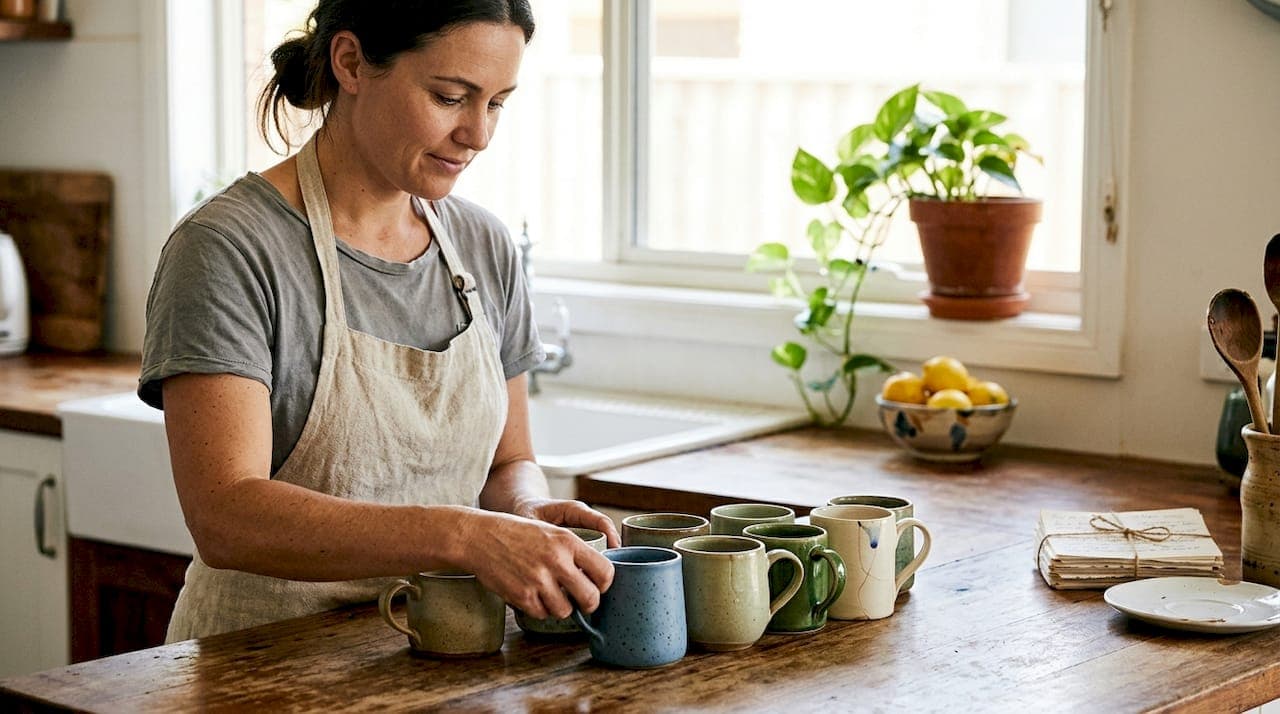
Cohesion does not mean identical. That is the first thing worth clearing up. A cohesive mug set can be matching (same glaze, same form), coordinating (shared colour family or finish), or even purposefully eclectic (different styles that share a unifying thread like a common tone or era). The key is that the pieces feel like they belong together, even if they are not twins.
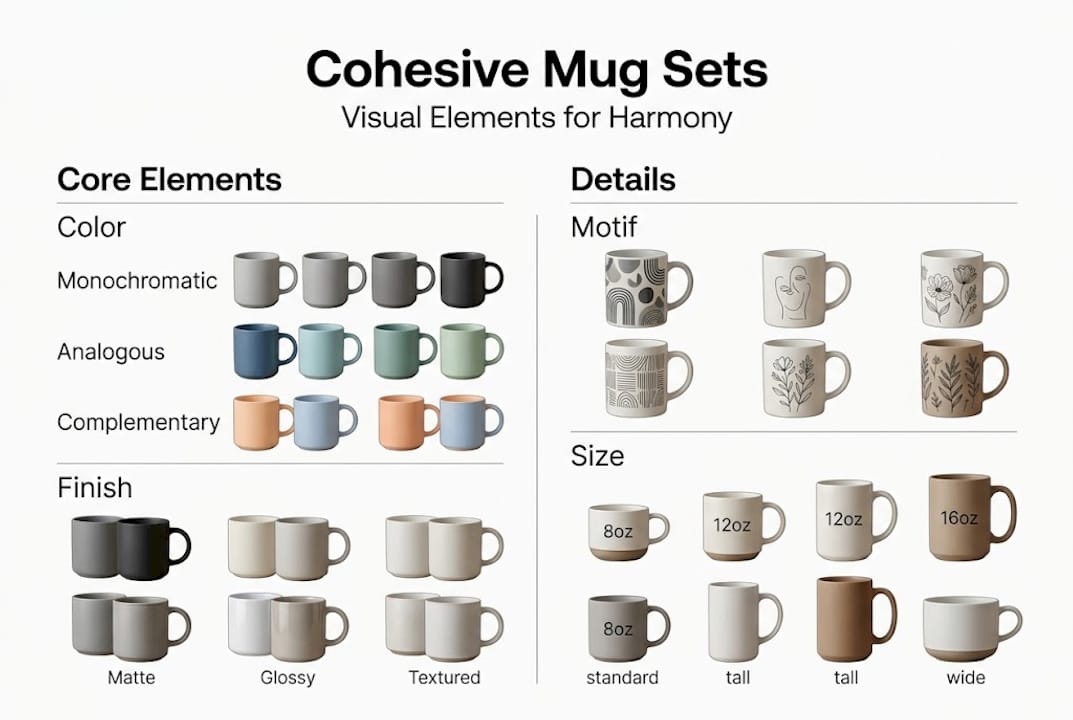
Visual harmony comes from four main elements: colour, finish, size, and motif. When these elements share at least one common thread, the eye reads the group as intentional rather than accidental. A set of speckled stoneware mugs in varying earthy tones, for example, feels cohesive because the finish and palette are aligned even if the shapes differ slightly.
Functional themes matter just as much. Are these mugs for a shared morning ritual? A seasonal rotation? A gift set that reflects a recipient's personality? Knowing the purpose helps you choose pieces that work together in use, not just on display. A ceramic design for slow living approach prioritises this kind of purposeful curation over sheer visual uniformity.
Experts recommend limiting to 3-5 favourites per person for practical, joyful daily use in slow-living. More than that and the ritual starts to feel cluttered rather than calm. Think of it like a capsule wardrobe for your kitchen shelf.
| Set type | What it looks like | Best for |
|---|---|---|
| Matching | Same glaze, form, and motif | Gifting, formal table settings |
| Coordinating | Shared colour or finish, varied forms | Daily use, relaxed aesthetics |
| Purposefully eclectic | Mixed styles with one unifying thread | Collectors, slow-living enthusiasts |
Signs your mug set feels cohesive:
- The eye moves naturally from one piece to the next without stopping
- Colours share at least one tone or temperature (warm or cool)
- Each mug feels comfortable to hold and use alongside the others
- The overall grouping sets the mood you intended, whether calm, playful, or elegant
- You reach for any mug in the set without hesitation
If you find yourself always avoiding one particular mug, that is a signal it is disrupting the flow. A cohesive set should feel effortless to use every single day.
Essential elements: Colour, pattern, and finish
Colour is the most immediate signal your eye receives. A set built around a neutral palette, think warm whites, soft greys, and sandy tones, creates a sense of quiet and ease. Introducing one accent colour, a deep forest green or terracotta, adds depth without disruption. The trick is to let the neutrals do the heavy lifting and use the accent sparingly.

Pattern-matching is where many people stumble. The instinct is to pair similar patterns, but that often creates visual competition. The more effective approach is contrast in scale: pair a large, bold motif with a small, subtle one. A mug with a sweeping floral print sits beautifully next to one with a fine speckled texture. They are different enough to create interest but share enough visual weight to feel related. The Nordic minimalist mug styles at Muggie demonstrate this balance well.
Finish is the element people overlook most often. Matte, glossy, and speckled finishes each carry a different emotional register. Matte feels grounded and tactile. Glossy feels refined and a little formal. Speckled sits somewhere in between, earthy but polished. Mixing finishes with intention, say, a matte base mug paired with a lightly speckled accent mug, creates layered interest without chaos.
| Combination | Effect |
|---|---|
| Neutral palette + matte finish | Calm, grounded, slow-living feel |
| Bold pattern + glossy finish | High impact, statement piece |
| Mixed neutrals + speckled finish | Warm, collected, artisanal look |
| Clashing patterns + mixed finishes | Visual noise, disrupts cohesion |
How to test mug combinations at home:
- Place the mugs together on a neutral surface in natural morning light
- Step back two metres and squint slightly to blur detail and read overall tone
- Check that no single mug dominates or disappears in the grouping
- Align handles in the same direction and assess visual weight across the set
- Swap one mug at a time to see what changes and what improves
Pro Tip: On dark mugs, use high-contrast light designs and avoid placing fine details near curved surfaces or handles, as these areas distort the design and reduce its legibility. The design options for dark mugs at Muggie show how bold, simple motifs work best on deeper glazes.
When exploring variety in ceramic finishes, consider how each piece will look in your specific light conditions at home. A glossy mug that looks stunning in a shop can feel harsh under warm kitchen lighting.
Curating sets for slow living and gifting
The slow-living approach to mugs is simple: fewer pieces, more meaning. Rather than filling a cupboard, you build a small, intentional collection where every piece earns its place. This is not minimalism for its own sake. It is about reducing the friction between you and your morning ritual so that the act of choosing a mug becomes a small pleasure rather than a decision.
"No empirical benchmarks, but experts favour 3-5 mugs per person for daily ease."
Steps to curate your personal set:
- Start with your most-used mug and identify what you love about it (colour, weight, handle shape)
- Choose two or three pieces that share at least one of those qualities
- Introduce one piece that contrasts gently, a different finish or slightly bolder motif
- Edit out anything that feels like a compromise or that you rarely reach for
- Reassess seasonally and rotate pieces to keep the ritual feeling fresh
When curating a gift set, consider:
- The recipient's home colour palette and existing tableware
- Their daily rituals: are they a tea drinker, a coffee person, or both?
- Whether they prefer calm, neutral aesthetics or more expressive, patterned pieces
- The occasion and what mood you want the gift to evoke
Pro Tip: Vary pattern scale and mix eras for a curated, collected look. Pairing a vintage-inspired piece from the classic tea cup selection with a modern mug from the coffee mug collection creates that hygge-style warmth that feels personal rather than purchased.
For gifting, presentation matters as much as the pieces themselves. Wrap mugs individually in tissue and nest them together in a box with a handwritten note explaining why you chose each piece. That context transforms a set of ceramics into something genuinely memorable.
Troubleshooting and creative adaptations
Even with the best intentions, a set can develop an outlier. A mug received as a gift, a sale find that seemed perfect but clashes in practice, or a piece that simply does not sit well with the others. Here is how to address the most common problems.
Common problems and how to fix them:
- Clashing motifs: If two patterns compete, introduce a plain mug in a shared colour between them to act as a visual buffer
- Mismatched scale: A very large mug next to a very small one creates imbalance. Use the larger piece as a standalone statement and group the smaller ones together
- The outlier mug: Give it a dedicated spot, a desk, a bedside table, or a guest shelf, rather than forcing it into the main set
- Finish conflict: A single glossy mug in an otherwise matte set can work if its colour is closely aligned. If it still feels wrong, use it for a different purpose like a pen holder or plant pot
Creative adaptations for tricky pieces:
- Rotate mugs seasonally so the outlier becomes the feature piece in a different context
- Use trios rather than pairs for asymmetrical groupings that feel more relaxed and organic
- Display a beloved but mismatched mug on a shelf as a decorative object rather than part of the active set
- Lend it to a friend and replace it with something that fits better
When adapting unique mug designs, remember that fine details on curved glossy surfaces near handles distort and lose their impact. If a mug's design feels busy or unclear, that is often the reason.
Do not be afraid of a little quirk. A set with one slightly unexpected piece often has more character than a perfectly uniform one. The goal is overall flow, not rigid conformity.
The overlooked art of mindful mug matching
Here is something the homeware retail world rarely admits: a perfectly uniform set is often the least interesting option. When every piece is identical, there is nothing for the eye or the memory to hold onto. Real warmth comes from small differences, a slightly deeper glaze on one mug, a motif that echoes rather than copies another.
The best sets tell a story. They reflect the people who use them, the places pieces were found, the rituals they have witnessed. A daily ritual with ceramics is not about impressing guests with a coordinated table. It is about building a small world of objects that feel genuinely yours.
Slow-living values the process of choosing and using over the appearance of having it all together. Matching mugs, done well, is an act of care. Not perfection. The creative journey of finding pieces that resonate is part of the pleasure, and no amount of visual mismatch can undermine a set that was chosen with genuine attention.
Shop matched mugs and curated sets with intention
If you are ready to build a set that feels as considered as your morning ritual deserves, Muggie's handcrafted ceramics are a natural place to start.
From the warmth of a vintage ceramic mug set to the delicate beauty of a floral tea set, every piece is chosen for its quality, tactile appeal, and ability to sit beautifully alongside others. Browse the full range of giftable mug sets to find combinations that suit your style or the person you are gifting. Whether you lean minimalist or floral, modern or vintage-inspired, there is a set waiting to become part of your daily ritual.
Frequently asked questions
How many mugs should I include in a matched set?
Experts recommend 3-5 mugs per person for both daily use and slow-living aesthetics. This number keeps the ritual feeling intentional rather than cluttered.
What is the best way to match a dark mug with others?
Pair dark mugs with high-contrast light designs and avoid placing fine details near curved surfaces or handles, where the design distorts most.
Is it okay to mix vintage and modern mug designs?
Yes. Mixing eras and pattern scales creates a curated, collected look that feels personal and warm rather than mass-produced.
What should I avoid when matching mug designs?
Avoid fine details on curved glossy surfaces, overly similar sizes without any variation, and competing motifs that fight for visual attention.