TL;DR:
- The ideal tea cup enhances sensory engagement through form, shape, material, and tactile qualities.
- Choosing the right cup involves considering size, material, weight, finish, and ritual context for mindful use.
- A well-chosen cup becomes a sensory cue that anchors slow living and deepens daily tea rituals.
There is something quietly transformative about holding the right tea cup. Not just any cup pulled from a crowded shelf, but one that feels settled in your palms, that warms your hands before the first sip even arrives. For anyone drawn to slow mornings and intentional rituals, the cup you choose matters far more than most people realise. This guide walks you through exactly what to look for, from materials and form to the sensory details that turn an ordinary brew into a genuine moment of pause.
Table of Contents
- Understanding what makes a tea cup special
- Gathering what you need: Checklist for mindful tea cup selection
- Step-by-step: How to select the right tea cup for you
- Common pitfalls to avoid when selecting tea cups
- Our perspective: Why mindful tea cups matter more than you think
- Discover mindful ceramics for your ritual
- Frequently asked questions
Key Takeaways
| Point | Details |
|---|---|
| Material matters | Choose artisanal ceramics like Jian Zhan or Yixing for the richest sensory rituals. |
| Tactility enhances ritual | Handleless cups foster deeper engagement and a unique patina over time. |
| Fit to your lifestyle | Pick cups that match both your tea habits and slow living intentions. |
| Avoid common mistakes | Prioritise comfort and function over just visual appeal to ensure lasting satisfaction. |
Understanding what makes a tea cup special
Not every cup is built to carry a ritual. The difference between a tea cup that sits unused and one that becomes a daily anchor often comes down to a handful of physical qualities most people overlook in the shop.
Form is the first consideration. Handled cups offer familiarity and a sense of comfort, particularly for longer, slower sessions. Handleless cups, by contrast, ask you to hold the vessel directly, connecting you to the warmth of the tea itself. That direct contact slows you down in a way a handle simply cannot. Many tea enthusiasts find that handleless artisanal ceramics for tactile engagement offer patina development and genuine tea enhancement, elevating daily sips to sensory events.
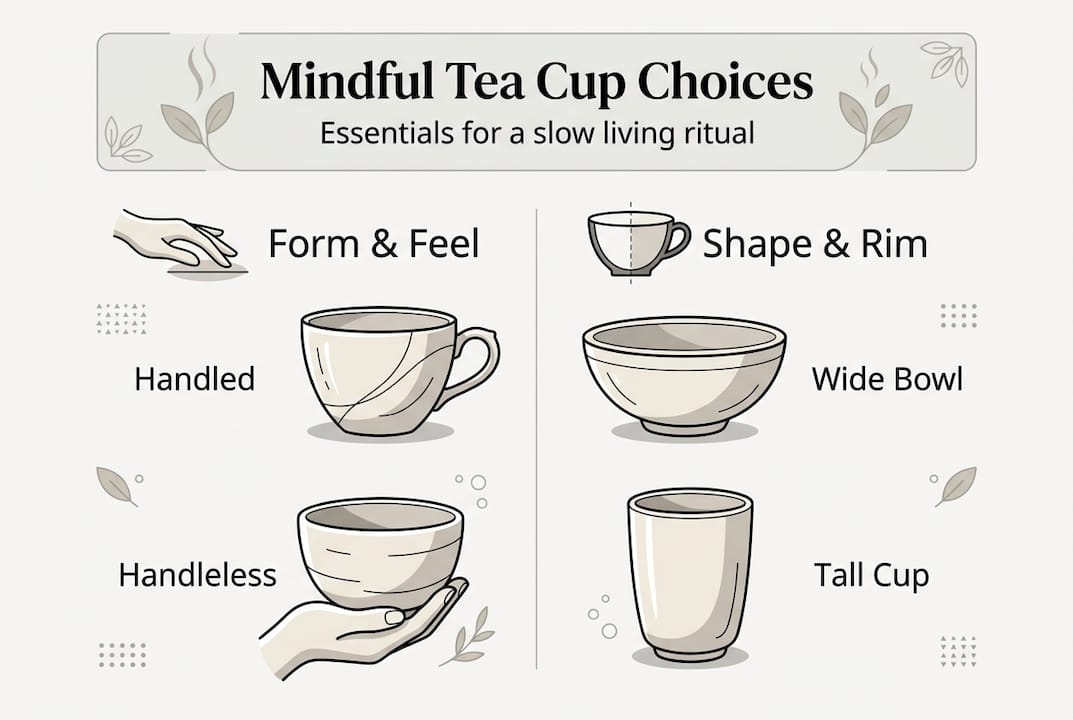
Shape and rim matter enormously too. A wide, shallow bowl releases aroma more freely. A narrow, tall cup holds heat longer. The rim thickness affects how the tea meets your lips, and even a few millimetres difference can change the whole experience.
Material is perhaps the richest variable of all. Here is a quick comparison of the most common choices:
| Material | Tactile quality | Patina development | Ritual suitability |
|---|---|---|---|
| Jian Zhan (tenmoku) | Heavy, earthy, textured | Strong over time | Deep, ceremonial |
| Yixing clay | Dense, matte, warm | Very strong | Traditional, meditative |
| Stoneware | Solid, slightly rough | Moderate | Everyday slow living |
| Porcelain | Smooth, fine, light | Minimal | Delicate, visual focus |
| Glazed ceramic | Varies widely | Minimal to moderate | Flexible, casual |
Beyond material, pay attention to these sensory qualities when evaluating any cup:
- Weight: A heavier cup demands presence. You cannot rush through tea when you are genuinely holding something.
- Warmth retention: A thick-walled cup keeps your tea at the right temperature for longer, inviting you to linger.
- Texture: Subtle surface variation under your fingers adds another layer to the ritual experience.
- Patina over time: Some ceramics develop a living surface with repeated use, making the cup uniquely yours.
"The best slow living cups are not the most expensive or the most visually striking. They are the ones that change alongside you, developing a surface story that belongs only to that cup and its owner."
If you are drawn to tactile detail, a floral embossed ceramic teacup or a scalloped rim blue teacup can offer that added sensory layer from the very first use.
Gathering what you need: Checklist for mindful tea cup selection
Before you start browsing, it pays to get clear on your own requirements. A cup that works perfectly for a solo morning ceremony will feel wrong at a shared afternoon table.
Use this checklist to pin down your priorities:
- Size: Do you prefer small sips (60ml to 120ml) or a fuller pour (150ml to 250ml)?
- Material: Do you want a patina-developing handleless cup or a glazed everyday ceramic?
- Weight: Do you prefer something substantial in hand, or light and fine?
- Finish: Matte, textured, or smooth glaze?
- Use frequency: Daily ritual, occasional ceremony, or travel?
Once you have that checklist sorted, consider the shape that suits your most common ritual:
| Cup shape | Ideal use |
|---|---|
| Small bowl (60ml to 90ml) | Gongfu ceremony, single pour savouring |
| Flared rim (90ml to 120ml) | Aroma-forward teas like oolong and white |
| Tall cylinder (150ml to 200ml) | Long morning sessions, higher-volume brews |
| Wide shallow bowl | Matcha, whisked teas, visual appreciation |
Now follow these steps to clarify your ritual intentions:
- Define your context: Is this a solo morning ritual, a shared ceremony, or something you carry while travelling?
- Identify your tea type: Different teas genuinely benefit from different cup shapes and materials.
- Consider your pace: A slower, more meditative ritual calls for a smaller, heavier cup that demands attention.
- Think about longevity: Are you choosing a cup you want to use for years, or something for a specific season or occasion?
As handleless artisanal ceramics offer tactile engagement and develop unique patinas, they are particularly worth considering if your ritual is daily and solitary.
Pro Tip: Pick up the cup and hold it empty for thirty seconds. If it already feels satisfying before any tea enters the picture, it is the right cup for slow living.
For a ceremonial weight and finish, the Ru ceremonial cup is worth exploring, while the Dunhuang Buddha mug suits those who want a meditative visual anchor alongside their brew.
Step-by-step: How to select the right tea cup for you
With your requirements clear, work through this practical selection process before committing to a cup.
- Shortlist by material and form first: Ignore colour and pattern initially. Focus on whether the cup is handleless or handled, and what it is made from. This narrows your options quickly.
- Test the grip: Hold the cup with both hands around the body. Does it feel grounded? Does the weight feel intentional rather than accidental?
- Evaluate the rim: Press the rim lightly to your lower lip. A thin, even rim draws you in. A thick, uneven one creates resistance every single sip.
- Consider aroma delivery: Tilt the cup and breathe in from the bowl. A wider opening releases more volatile aromatics, which enriches the ritual experience.
- Imagine use over time: Can you picture this cup on your table in two years, with some patina and warmth accumulated? That mental image is worth trusting.
- Reflect after a trial pour: If you are in a physical shop, ask to pour a small amount of hot water. Feel how the warmth travels through the walls to your palms.
Choosing ceramics like Yixing and Jian Zhan enhances tactile engagement and ritual pleasure in a way that mass-produced alternatives simply cannot replicate.
Pro Tip: Try sipping from a shortlisted cup with your eyes closed. With visual distraction removed, you will notice grip, rim feel, and warmth far more clearly.
When shopping online, look for product descriptions that mention glaze thickness, firing technique, and the maker's process. A floral design gaiwan or a lotus design gaiwan both offer detailed artisan backstories worth reading before you decide.
Common pitfalls to avoid when selecting tea cups
Even with the best intentions, it is easy to make choices that look right but feel wrong after the first week. Here are the most common mistakes to sidestep.
- Choosing looks over feel: A beautiful glaze that feels slippery or too light in the hand will never fully serve a slow ritual.
- Going too large: A 300ml cup encourages you to rush. Smaller volumes invite shorter, more attentive pours.
- Buying mass-produced ceramics for ritual use: Factory-made cups with inconsistent glaze thickness rarely develop meaningful patina and lack the tactile variation that makes artisanal pieces so rewarding.
- Ignoring surface finish: Overly glossy finishes can feel clinical and do not develop the warmth and character that patina and sensory ritual require for genuine mindful practice.
- Mismatching cup and ritual: A fine porcelain cup suited for delicate green tea will feel out of place at a deep, smoky pu-erh ceremony.
"Handleless cups require an adjustment period. Your hands need time to learn the temperature cues and the grip. But that learning process is itself part of the ritual, and the reward on the other side is a richer, more embodied tea experience."
For those curious about cross-style ceramics, the kiln-glazed yellow matcha bowl bridges everyday use and artisanal character without demanding a full ceremony commitment.
The biggest pitfall of all is treating a tea cup as an accessory rather than a tool. When you choose a cup that genuinely fits your hands, your rituals, and your pace, you will notice the difference within days.
Our perspective: Why mindful tea cups matter more than you think
Most buying guides stop at style and material. We think that misses the actual point entirely.
The cup you reach for each morning becomes a sensory cue. Over time, that cue signals to your nervous system that it is time to slow down. It is not mystical. It is simply how habits and objects interweave in daily life. A cup that fits well in your hands, feels warm, and improves with use becomes a genuine anchor for your day.
We have seen this happen with slow living ceramics again and again. Someone buys a cup for its appearance, then discovers six months later that it has become the centrepiece of their entire morning practice. Not because the cup is precious or expensive, but because it carried the ritual long enough for the ritual to carry itself.
The conventional advice says: find something you like the look of. Our view is: find something that earns your attention each time you hold it. A cup that develops a patina, that warms your palms, that slows your breath just slightly as you lift it. That is the cup worth choosing.
Discover mindful ceramics for your ritual
If this guide has helped clarify what you are looking for, the next step is finding a cup that genuinely fits your practice.
At Muggie, we curate handcrafted ceramics with slow living at their core. Every piece in our curated ceramic tea cups collection is chosen for tactile quality, artisan craft, and daily usability. Whether you are drawn to the delicate detail of a hand-painted pedestal floral cup or the deep, earthy character of a Jianzhan kungfu tea cup, our range is built to support the kind of ritual that actually changes how your mornings feel. Explore the collection and find the cup that your hands have been waiting for.
Frequently asked questions
What size tea cup is best for slow living rituals?
Smaller cups in the 60ml to 120ml range work best because smaller servings for slow rituals encourage mindfulness and invite you to savour each individual pour rather than consuming your tea quickly.
Why choose a handleless ceramic tea cup?
Handleless ceramics foster a direct tactile connection with the warmth of the tea and develop a unique patina over time, making each cup increasingly personal and deepening the overall ritual experience.
Can I use the same tea cup for all tea types?
You can, but different ceramic types interact with different teas in distinct ways, so using a dedicated cup for specific teas like Yixing for oolong or porcelain for green tea enhances both flavour and mindful intention.
How do I care for an artisanal tea cup?
Rinse your cup gently with warm water after each use and avoid harsh detergents, as patina development is key for handleless artisanal ceramics and builds gradually through repeated, gentle use.
Recommended
- How to match mug designs for gifting and slow living
- Ceramics for Slow Coffee and Tea
- Jianzhan Kungfu Tea Cup – Cyan | Muggie
- Handmade Ceramic Teacup with Floral Embossed Design – 80ml Traditional Chinese Tea Cup | Muggie
- Artisanal Japanese Matcha Tea Set - Elegant Asian Ceramic Tableware fo – My House by Marine